Growth and what carries it
In a first estimate, the National Institute of Statistics put Tunisia's growth at 2.3 per cent in the second quarter of 2026 against the same quarter of 2025, and services and agriculture carried most of it: industry as a whole managed 0.3 per cent and mining fell 9.6. Two institutions have since put the full year below that: the World Bank at 2.3 per cent and the EBRD at 2.4, against the 3.3 the budget bill assumed.
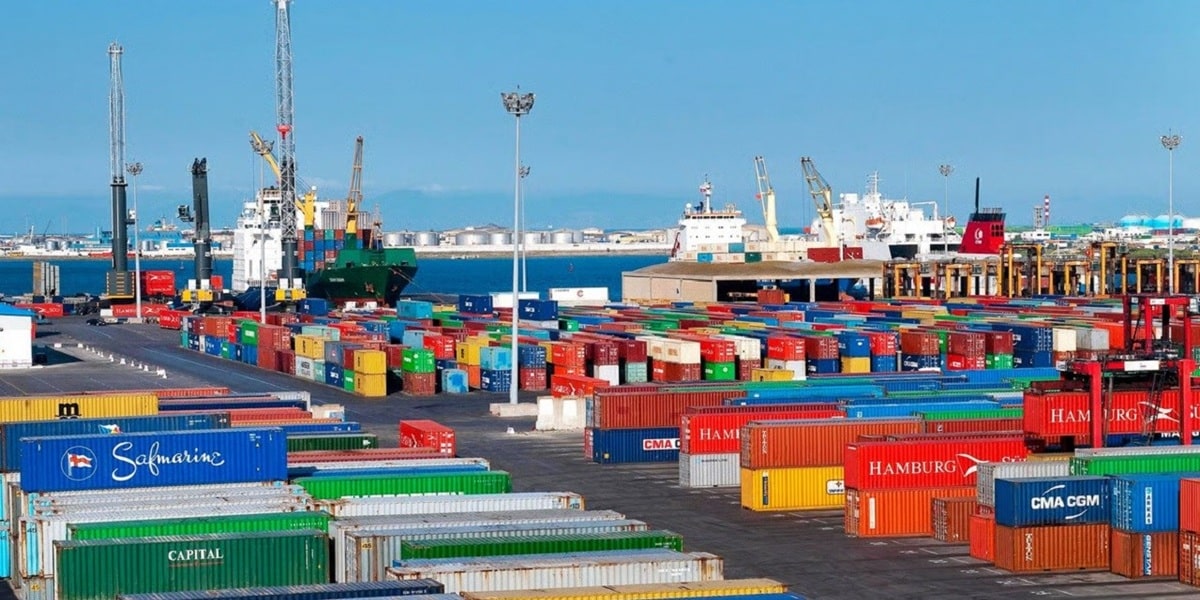
The National Institute of Statistics put Tunisia's growth at 2.3 per cent in the second quarter of 2026 against the same quarter of 2025, and 2.4 per cent over the first half. Services carried the largest share, 1.18 points of that 2.3, with hotels and restaurants up 4.6 per cent, and agriculture grew fastest at 5.5 per cent. Domestic demand, that is consumption and investment, rose 3.3 per cent and contributed 3.61 points. Net external trade took 1.33 points away: imports rose 11.2 per cent against exports at 10.4.
Industry as a whole managed 0.3 per cent. Value added in energy, mining, water and waste fell 1.7 per cent, with mining down 9.6 per cent and oil and gas extraction down 1.1. The institute's industrial production index, published on 18 August 2026, shows the same fall: output rose 1.5 per cent in the quarter, while mining fell 9.9 per cent and chemicals 6.4. Over six months output rose 2.9 per cent, helped by oil refining up 123.4 per cent after several stoppages the previous year.
ONAGRI, the agriculture observatory, counted 368,000 tonnes of olive oil exported over the first nine months of the 2025/2026 season, to the end of July 2026, against 236,900 a year earlier, a rise of 55.3 per cent. Receipts were 4,605.3 million dinars, up 44.4 per cent. Réalités puts the same receipts at about 1.4 billion euros, and says volume outran revenue because the harvest was abundant and world prices fell. Most of the oil leaves in bulk, 86 per cent of the volume and 81.4 per cent of the receipts.
Foreign investment goes to different sectors from the ones that grew. FIPA, the foreign investment promotion agency, put international investment at 1,929.5 million dinars to the end of June 2026. Direct investment was 1,911.8 million of it, and manufacturing took 72 per cent, energy 19 per cent, services 7.7 and agriculture 1.3. Manufacturing value added grew 0.9 per cent in the quarter, against agriculture's 5.5. Tunisia is counting on 4 billion dinars for the whole of 2026, against 3.5 billion in 2025.
For the government, the half year shows an economy that can absorb internal and external shocks. Samir Abdelhafidh, the economy and planning minister, presented the framework of the 2027 economic budget to a ministerial council chaired by Sarra Zaafrani Zenzri on 19 August 2026. An economic budget is the yearly plan that must square with the same year's finance bill. The 2026 budget bill had assumed 3.3 per cent for the year, against the 2.4 measured so far, and La Presse's account of the council carries no revised figure.
Two forecasts arrived in late September 2026 and both sit under the budget's assumption. The World Bank's Tunisia Economic Update, reported on 22 September, puts real GDP growth at 2.3 per cent for 2026 against 2.7 per cent in 2025, and an average of 2.1 per cent across 2027 and 2028. The EBRD, publishing on 24 September, puts 2026 at 2.4 per cent and 2027 at 2.3. The 2026 budget bill assumed 3.3. The World Bank names the constraints as barriers to competition, limited access to financing, policy distortions and low female labour force participation, and reports the energy deficit up 30 per cent in the first half and the current account deficit up 49 per cent in nominal terms. It also warns that the turn to domestic funding, including direct central bank financing of the budget that has been recurrent since 2024, could crowd out private credit and add to inflation.
The EBRD puts the division this page is about in a single line: improved agricultural production has helped offset weaker performance in chemicals, textiles and other industrial sectors. Dates are the clearest instance of the first half of that sentence. Kaïsar Ben Arfa, who heads the date producers' group, said exports had passed 150,000 tonnes and a billion dinars for the first time, with the season still running. ONAGRI had them at 144,100 tonnes and 908.4 million dinars at the end of July. Tunisian dates reach about 94 countries, and European markets take about 40 per cent.
The numbers
What the comparison shows
Where they agree
The statistics institute measures mining in two different series, and both fall. The national accounts show its value added falling 9.6 per cent in the second quarter of 2026, and the industrial production index shows its output falling 9.9 per cent over the same quarter.
What nobody is saying
Nobody says what share of the olive oil should leave the country packaged, or by when. The industry ministry approved advertising and promotion programmes for packaged-oil exporters on 8 May 2026, and the announcement, as Managers reported it, names the markets it is aiming at but gives neither a share nor a deadline.
Our coverage
- Tunisia's trade deficit widens to 20.997 billion dinars over nine monthsMonday, 12 October 2026
- Tunisia's imports of Russian diesel and petrol fall by halfSunday, 11 October 2026
- Tunisia's exports to Congo jump 140 percent to a record for the first eight monthsSunday, 11 October 2026
- Enfidha port project back on the agenda, in the shadow of Morocco's Tanger MedSaturday, 10 October 2026
- Tunisia's interest-free 'honour loans' exhausted on day one, 14,200 applicationsTuesday, 6 October 2026
- Fuel subsidy could reach 11.2 billion dinars this year, economist warnsTuesday, 29 September 2026
- Tunisia becomes a major buyer of Azerbaijani crude, imports more than doubleSunday, 27 September 2026
- Tunisia's date exports pass 150,000 tonnes and 1 billion dinars for the first timeSunday, 27 September 2026
- Saïed presses banks to ease credit and rein in rising pricesSaturday, 26 September 2026
- EBRD raises Tunisia's 2026 growth forecast to 2.4 percentThursday, 24 September 2026
- World Bank expects Tunisia's growth to slow to 2.3 percent in 2026Wednesday, 23 September 2026
- Tunisia's trade deficit widens to 17.85 billion dinars over eight monthsFriday, 18 September 2026
- Tunisia's farm exports narrow trade deficit by 7.7% in first half of 2026Friday, 11 September 2026
- Attijari bank Tunisia's classified loans jump 23 percent as coverage ratio fallsMonday, 31 August 2026
- Property sales in Tunisia down 80 percent, developers' body warnsSaturday, 29 August 2026
- Tunisia faces pressure for fuel price hikes as import costs climbWednesday, 26 August 2026
- Tunisia's olive oil exports top 1.4 billion euros for the seasonWednesday, 26 August 2026
- Tunisian olive oil exports jump 55% as Spain and Italy lead demandSunday, 23 August 2026
- The economy minister sets out the 2027 budget framework and calls the economy resilientThursday, 20 August 2026
- Tourism and remittances pass 10 billion dinars together, the central bank reportsThursday, 20 August 2026
- Foreign investment reaches 1.93 billion dinars in the first halfThursday, 20 August 2026
- Tunisia's industrial output rose 1.5 percent in the second quarter, INS saysWednesday, 19 August 2026
- Tunisia ranks 75th of 161 in the prosperity index, first in North AfricaMonday, 17 August 2026
- Growth reaches 2.3 percent in the second quarter, held back by miningSaturday, 15 August 2026