Debt and financing
Without an IMF programme, Tunisia repaid on 15 July 2026 what Kapitalis called its last big international eurobond, and now covers its budget from domestic banks and regional lenders, with remittances and tourism holding up the reserves: a model the government calls self-reliance and its critics call a debt that has only changed address. Fitch named the new address in September 2026: the central bank, whose interest-free lending it put at 11 billion dinars for 2026 and expected to end in 2027.
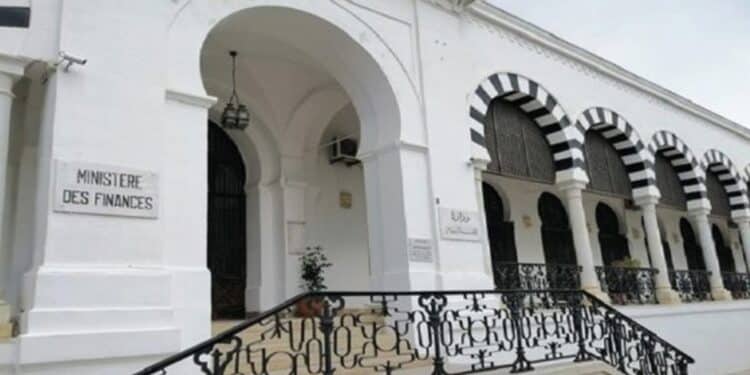
On 15 July 2026 Tunisia repaid a bond of 700 million euros issued in July 2019. It ran seven years at 6.375 percent, and the whole principal fell due on one day with the last annual coupon. Réalités put the July instalment, interest included, at 740 million euros. The economist Moktar Lamari, writing in Kapitalis on 15 July, priced the seven years at just over 1.012 billion euros, about 45 percent of the capital paid in interest. The Central Bank of Tunisia confirmed the repayment on 29 July.
Tunisia has had no IMF programme since talks over a 1.9 billion dollar package stalled in October 2022, and Saied then broke them off. Treasury bills and direct central bank advances have pushed domestic debt past 88 billion dinars, on the economist Kaies Samet's figures. Four laws promulgated on 31 July 2026 ratified 620 million dollars and 110 million euros of external borrowing. The biggest piece, 500 million dollars from Afreximbank, goes to the 2026 state budget; the rest goes to the phosphate and chemicals companies.
After the repayment the central bank put net foreign assets at 23.4 billion dinars, or 92 days of import cover, at 28 July 2026. Réalités read the same indicator at 22.7 billion and about 90 days on 20 July. The economist Moez Soussi, on Diwan FM, put the fall at nine days: 101 days just before the payment, 92 on 2 August, the level the bank gave for 28 July. Its board held the policy rate at 7.00 percent on 29 July, with inflation at 5.1 percent in July. Both numbers have moved since. The central bank put net reserves at 25.274 billion dinars and 99 days of cover on 3 September 2026, 1.874 billion and seven days above the 28 July figures. Inflation went the other way: the INS put it at 5.6 percent in September, against 5.1 in July, with food and drink at 8.4 percent against 7.5 in August.
What holds the reserves up is not exports. On central bank indicators at 20 July 2026, remittances and tourism had brought in more than 9 billion dinars since January. Remittances were up 5.2 percent at more than 5 billion, tourism receipts up 4.6 percent at close to 4 billion. Energy pulls the other way: the central bank recorded a record first-half energy bill of 8.502 billion dinars, against 6.370 billion a year earlier. Strip energy out and the current account showed a 2.538 billion dinar surplus at end June.
The government's name for this is compter sur soi, self-reliance. A ministerial council under Prime Minister Sara Zaafrani Zenzri built the 2027 budget guidelines on it on 4 August 2026. Governor Fethi Zouhair Nouri reads the result as deleveraging: long-term external debt fell from 82 to 68 billion dinars between 2022 and 2025. The analyst Moez Hadidane counts total public debt up from 83 billion dinars in 2019 to 141 billion in 2025, with the external share down from about 70 percent to 40.
Fitch affirmed Tunisia at B- with a stable outlook on 8 September 2026. It put the budget deficit at 6.4 percent of GDP for 2026, against a 3.3 percent median for countries it rates B, and expected no significant fiscal reform in the short term. It put public debt at 85 percent of GDP for 2026, against a 55 percent median, broadly stable to 2028, with about 40 percent of it in foreign currency. Budget financing needs reach 13.5 percent of GDP in 2028, against a median of 8.9.
The central bank lent the state 7 billion dinars interest-free in 2024 and again in 2025, and Fitch expected 11 billion in 2026, about 6.1 percent of GDP. It also said that financing should end in 2027, while net domestic borrowing rises from 1.7 percent of GDP in 2026 to 6.5 percent in 2027, which could weigh on the domestic financial sector. The stock of Treasury bonds was 37.23 billion dinars on 1 October 2026, up 5.69 billion and 18.1 percent on the year from 31.54 billion, and the 2026 finance law budgeted 19.056 billion dinars of domestic borrowing. Webdo flags the crowding-out risk and is careful about it: more resources going to the state can compete with what is left for firms and households, but a rise in Treasury bonds does not automatically mean less credit. Fitch also recorded how the eurobond was paid, notably with central bank loans.
”The debt has not disappeared; it has simply changed address. You do not repay a debt: you move it house.”
The numbers
What the comparison shows
Where they agree
Officials and critics work from the same central bank figures: 23.4 billion dinars of net foreign assets, 92 days of import cover, at 28 July 2026. Kais Saied, Moez Soussi and Moktar Lamari all treat the eurobond as repaid in full and on time. Saied and Lamari agree too that Tunisia is now financing itself without the IMF, and disagree only about whether it chose to.
Where they split
Two splits, not one. The first is over what the fall in external debt means. Governor Fethi Zouhair Nouri reads it as deleveraging: long-term external debt down from 82 to 68 billion dinars, and yields on Tunisian bonds down from over 30 percent in 2023 to around 7 percent in the first five months of 2026. Moez Soussi, who holds no government post, puts the July payment at close to 2.5 billion dinars and nine days of import cover, and still calls it a credibility gain that could reopen market access. Moktar Lamari reads the same seven years as a bill: just over 1.012 billion euros paid on 700 million borrowed, and spent on current expenses rather than on any identifiable asset. He also rejects the idea that this was a choice: Tunisia left the international market because it lost access, not because it decided to go. Kaies Samet accepts that it was a choice, but not what replaced the external money: treasury bills and central bank advances have taken domestic debt past 88 billion dinars, and he expects that to crowd out private investment. The second split runs inside the government. The 2027 budget guidelines of 4 August rest on compter sur soi, while Khaldi told parliament in late July that the external financing planned for 2026 was still being mobilised, and the central bank board asked on 29 July for external resources to be mobilised on appropriate terms.
What nobody is saying
The public record says what the Afreximbank money costs but not when it has to be repaid. Khaldi gave parliament the fixed rate of 5.86 percent, the negotiation down from about 9 percent, and the two tranches of 427 million dollars and then 73 million. African Manager reported the terms as confidential when the decree ratifying the loan was published in June, and noted that Afreximbank's earlier loans to Tunisia ran seven years and five years. The same outlet, reading the finance ministry's provisional budget execution results to the end of 2025, put drawings on those earlier loans between 2022 and 2024 at about 1.65 billion dollars, with none recorded in 2025.
Who says what
Saied broke off the IMF negotiations and frames external financing as a sovereignty question. Receiving the prime minister, the economy minister and the central bank governor at Carthage on 20 July 2026, at a meeting on the 2026 to 2030 development plan, he said the accumulated debt had brought the Tunisian people no benefit, said Tunisia had met every obligation without delay, and called for the debt to be turned into investment rebuilding public services. His finance minister told parliament that he had not refused external borrowing and had approved the Afreximbank decree himself.
”les dettes se sont accumulées sans que le peuple tunisien n'en bénéficie”the debts have accumulated without the Tunisian people benefiting from them
Defending the Afreximbank loan before parliament in late July 2026, she rejected the description of it as a consumption loan, saying it was part of the resources already programmed in the 2026 finance law. She said the Treasury's 2026 borrowing and financing needs come to nearly 27 billion dinars against a budget deficit of about 4 billion, that the rate had been cut from around 9 percent to a fixed 5.86 percent by negotiation, and that Tunisia now prefers domestic borrowing for technical reasons and to help contain inflation, while still mobilising the external financing that was planned.
”la dette en elle-même n'est ni bonne ni mauvaise”debt in itself is neither good nor bad
At the 22nd Tunisia Investment Forum on 26 June 2026 he said Tunisia had been in a phase of net external deleveraging since 2023, with long-term external debt down from 82 billion dinars in 2022 to 68 billion in 2025, about 18 percent. He noted that the default many international analysts expected in 2023 did not happen, and that yields on Tunisian bonds fell from over 30 percent in 2023 to around 7 percent in the first five months of 2026. He treats this as proof the approach works, while calling for growth driven by productive investment. The board he chairs nonetheless asked, in its 29 July communiqué, for external resources to be mobilised on appropriate terms.
Speaking on Diwan FM after the payment, he gave the sharpest account of what it cost: reserves down from 25.629 billion dinars and 101 days of import cover to 92 days at 2 August 2026, ten days below the same point of 2025, with the operation costing close to 2.5 billion dinars and the eurobond being the largest single piece of the 8.5 billion dinars of external debt falling due in 2026. He nonetheless reads the outcome as favourable: meeting the deadline in full strengthened the confidence of lenders and international investors, Tunisian sovereign bonds have recovered their face value after losing more than 51 percent of their market value in April 2023, and that could let Tunisia borrow on international markets again on better terms.
In his own signed column on the day of the repayment he priced the 2019 bond over its whole life: 700 million euros of principal plus seven annual coupons of 44.625 million, a little over 1.012 billion euros in all, so roughly 45 percent of the borrowed capital paid in interest. He argues the money financed current spending in a year of severe fiscal strain rather than any identifiable asset, that leaving the international market was less a sovereign choice than the consequence of losing access after the IMF talks collapsed, and that the arithmetic of the official closing narrative does not hold.
”La dette n'a donc pas disparu ; elle a simplement changé d'adresse. On ne rembourse pas une dette : on la fait déménager.”The debt has not disappeared; it has simply changed address. You do not repay a debt: you move it house.
He accepts that the turn away from the IMF after 2023 was a deliberate sovereignty choice, taken against American and European pressure, and that remittances and tourism are what keep reserves resilient. But he describes the domestic refinancing that replaced external money as a short-term strategy: between 2021 and 2026 the state multiplied treasury bill issues and direct central bank advances, and domestic debt has now passed 88 billion dinars. Continuing on that path, he argues, risks crowding out, or collapsing, private investment.
”Sans nouvel équilibre, le modèle de financement atteindra ses limites dès 2027”Without a new balance, the financing model will hit its limits as early as 2027
Our coverage
- Tunisia has already paid over 10 billion dinars in debt service this yearSaturday, 10 October 2026
- Dollar tops 3 dinars for the first time since May 2025Wednesday, 7 October 2026
- Tunisia's debt service set to ease to 20 billion dinars in 2027, analyst saysMonday, 5 October 2026
- Tunisia's inflation rises to 5.6 percent in September, food to 8.4Monday, 5 October 2026
- Tunisia's Treasury bonds outstanding hit 37.23 billion dinars, up 18%Sunday, 4 October 2026
- AIIB studies its first Tunisia project, an urban transport schemeTuesday, 29 September 2026
- Tunisia, US development finance agency discuss energy and mining investmentTuesday, 29 September 2026
- Fitch affirms Tunisia's "B-" rating, flags growing risk in domestic financingWednesday, 9 September 2026
- Tunisia's foreign currency reserves cover 99 days of imports, central bank saysMonday, 7 September 2026
- Tunisia lands on IMF's 'negative list' for the first time since joining in 1958Monday, 7 September 2026
- Saied tells German minister Tunisia's EU partnership deal must be 'more balanced'Tuesday, 1 September 2026
- World Bank report: Tunisia owes power utility STEG 22 months of unpaid billsMonday, 31 August 2026
- Tunisia faces pressure for fuel price hikes as import costs climbWednesday, 26 August 2026
- The economy minister sets out the 2027 budget framework and calls the economy resilientThursday, 20 August 2026
- Tourism and remittances pass 10 billion dinars together, the central bank reportsThursday, 20 August 2026
- Tunisia's 2027 budget: nobody disputes the figures, only what they meanThursday, 20 August 2026
- The trade deficit grew by 2.4 billion dinars in a single monthFriday, 14 August 2026
- The economist Aram Belhaj: the trade deficit is now structural, not a shockThursday, 13 August 2026
- Trade deficit widens to 14.96 billion dinars, energy the largest shareWednesday, 12 August 2026
- Inflation stood at 5.1 percent in July, with food still running at 6.6Saturday, 8 August 2026
- Can Tunisia tax what it cannot measure?Saturday, 8 August 2026
- 5.83 million visitors by the end of July, up 2.6 percentFriday, 7 August 2026
- Tunisia's government sets out 2027 budget guidelines under the banner of self-relianceThursday, 6 August 2026
- Tunisia's inflation eases to 5.1 percent in July, but food prices keep climbingThursday, 6 August 2026
- Free credit, paid for by the banks: is decree 148 a bad idea, or an unfinished one?Thursday, 6 August 2026
- The dinar gained 0.8 percent in July but is still down for the yearMonday, 3 August 2026
- Saïed ratifies more than 800 million dollars and 110 million euros in foreign borrowingSunday, 2 August 2026
- Central bank holds its policy rate at 7 percent, warning on inflation and the energy billFriday, 31 July 2026
- Central bank holds its policy rate at 7 percent and flags a record energy billThursday, 30 July 2026
- Sovereign guarantees for phosphate loans and an Afreximbank budget loan go before parliamentTuesday, 28 July 2026
- Remittances and tourism top 9 billion dinars as reserves hold at 91 days of importsSaturday, 25 July 2026
- Foreign reserves at 22.7 billion dinars after Tunisia clears the year's heaviest external repaymentThursday, 23 July 2026
- Foreign-currency reserves down to 22.7 billion dinars after the July debt paymentWednesday, 22 July 2026
- Saïed tells his economic team to turn Tunisia's debt into investmentWednesday, 22 July 2026
- Saïed ratifies World Bank guarantees for STEG's overhaul after a bruising parliamentary voteWednesday, 22 July 2026
- Tunisia repays a 740-million-euro debt instalment and secures a 500-million-dollar Afreximbank loanTuesday, 21 July 2026
- Tunisia clears its last eurobond, and the reserves show what it costFriday, 17 July 2026
- Tunisia's last big eurobond, 700 million euros, falls due on July 15Wednesday, 15 July 2026