Phosphates
Tunisia is borrowing 110 million euros abroad to re-equip a phosphate industry that produces well under half its installed capacity. Parliament approved the state guarantee on 28 July 2026, after a bonus dispute had stopped work at four mining towns in May and residents of Metlaoui had closed the roads over water cuts in July.
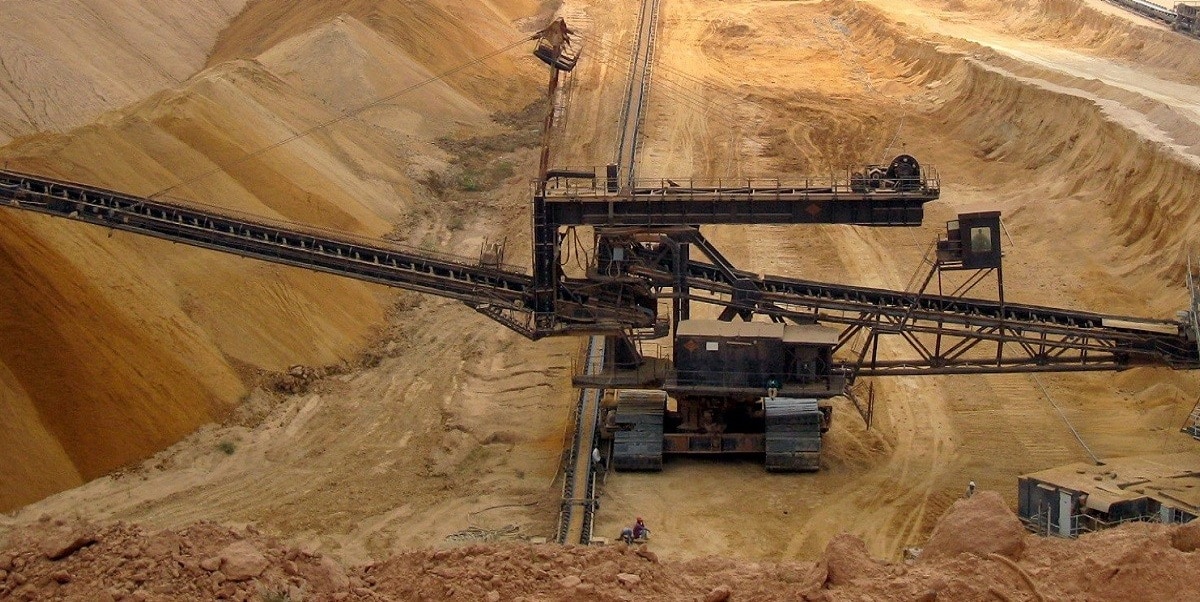
Phosphate rock is Tunisia's main mineral export, mined since 1897 by the state-owned Compagnie des phosphates de Gafsa, CPG. It runs ten open-pit mines and eight washing plants within 50 kilometres of Gafsa. About 80 percent of its concentrate goes to another state company, the Groupe chimique tunisien, GCT, which turns it into phosphoric acid and fertiliser. The EBRD calls CPG the main employer in the Gafsa region, where there is little other work.
The industry ministry recorded 8.131 million tonnes in 2010, 2.281 million in 2011 and 3.04 million in 2024. The US Geological Survey estimates 3.3 million tonnes for 2025. The EBRD's 3.2 million tonnes for 2024 counts concentrate, so the ministry, the USGS and the bank are not measuring quite the same thing. Samir Abdelhafidh, the economy minister, told parliament that phosphate is now about 0.5 percent of GDP and 3 percent of exports, against roughly 4 percent and 9 to 12 percent before 2011.
Parliament cleared the guarantee on 28 July 2026, by 58 votes to 13 with 9 abstentions. The EBRD lends CPG 110 million euros for mining machinery and for filter presses that recycle the water used to wash the ore. A separate 120 million dollars from the International Islamic Trade Finance Corporation buys sulphur and ammonia for GCT. Parliament voted that pair as bills 50 and 51 of 2026; they became laws 18 and 19. A decree of 1 June had put both companies under one chief executive, Omar Bouzouada.
Work stopped at Metlaoui, Redeyef, Moularès and Mdhilla in May 2026, after Eid and productivity bonuses came in at barely half previous years' levels and were paid without negotiation. The EBRD's board report, from September 2025, says the protests and strikes at CPG are mostly about expectations of jobs. In July, after several days of water cuts during a heatwave, residents of Metlaoui closed the roads into the town.
The EBRD's board report says CPG has no environmental and social management system, and that most tailings go into unengineered ponds or the environment. The bank asked its board for a derogation, judging existing operations unlikely to meet its standards fully during the loan. The filter presses are meant to raise water recycling to 90 percent, in a region where water extraction already exceeds natural recharge by up to 40 percent. The guarantee leaves the treasury liable, with public debt at 81 to 82 percent of GDP on Abdelhafidh's figures.
”the financings covered by bills 50 and 51 of 2026 are not intended for the modernisation of the Tunisian Chemical Group's means of production but for the import of raw materials needed to produce fertiliser”
The numbers
What the comparison shows
Where they agree
Abdelhafidh, Bouzouada and El Majdi all say the two companies cannot fund their own recovery. Bouzouada told parliament's finance committee in July 2026 that CPG is in a structural crisis of falling output, accumulated losses, ageing equipment and social disruption, and Rehili, sixteen months earlier, called the sector's problems chronic and structural and its equipment old. Abdelhafidh says CPG's finances are too weak for it to borrow abroad without the state behind it, and El Majdi says the money has to come with real administrative, financial and governance reform.
Where they split
Bouzouada's presentation puts the shortage of water for washing the ore and the state of transport at the top of what holds the sector back. Abdelhafidh puts it in terms of equipment and governance: the loan modernises CPG's machinery and water systems, and its terms are acceptable given the company's finances. Helal says what stopped the mines in May 2026 was pay: bonuses cut to barely half and imposed without negotiation. Rehili, speaking in March 2025, set CPG's need of 50,000 cubic metres of water a day for washing against the 11,000 the basin's two treatment plants can supply. That is not the same measure as the EBRD's 5.6 million cubic metres a year, which is what CPG takes from the ground, with 65 to 71 percent of the water used in washing recycled.
What nobody is saying
No one in the debate has reconciled the two production levels on the table: the 6 million tonnes a year the EBRD's water plans assume, and the 9.4 million tonnes CPG targets for 2035. The board report says that even once the filter presses are installed, CPG will still draw 3 million cubic metres of fresh water a year at 6 million tonnes. Nobody has put a figure on what 9.4 million would take from aquifers already drawn down faster than they refill. The financial highlights section of the EBRD board report is redacted, so the fullest public account of CPG's finances stops where the balance sheet would begin.
Who says what
Told parliament the loan belongs to a programme to restore CPG's production rhythm through new equipment and better water treatment, and that the company's finances were too weak for it to look for foreign money on its own. He put repayment at ten years with three years' grace, called the terms acceptable given the situation, and said CPG had not borrowed since 2014. He insists the Islamic trade financing is a different thing: it buys raw materials for GCT, not new plant. Better governance, he says, is imperative across all public enterprises. The companies stay in public hands, he says, and structural reform may go as far as merging them.
”les financements faisant l'objet des projets de loi n° 50 et n° 51 de l'année 2026, ne sont pas destinés à la modernisation des moyens de production du Groupe Chimique Tunisien (GCT) mais à l'importation de matières premières nécessaires à la production d'engrais”the financings covered by bills 50 and 51 of 2026 are not intended for the modernisation of the Tunisian Chemical Group's means of production but for the import of raw materials needed to produce fertiliser
CPG and GCT gave the finance committee of the National Council of Regions and Districts an integrated strategy costing about 2.7 billion dinars, aiming at 5 million tonnes of commercial phosphate in 2028 and 9.4 million in 2035. The presentation named the shortage of water for washing the ore and transport problems, including rail, as the main obstacles, and Bouzouada said the parties involved are working with the prime minister's office to remove them. On 21 July 2026 he told parliament's finance committee that CPG is in a structural crisis of falling production, accumulated losses, ageing equipment and social disruption, and that the recovery plan needs five to seven years.
Backs the decision to put CPG and GCT under one chief executive, calling it among the government's best moves, but says it settles nothing on its own. The sector's problems are deep and accumulated, he says, and getting out of them takes money together with real change in administration, finances and governance, not a new appointment at the top.
”الدمج الإداري بين الشركتين يعد من أفضل القرارات التي اتخذتها الحكومة”the administrative merger of the two companies is among the best decisions the government has taken
Says the Eid and productivity bonuses behind the May 2026 stoppages were barely half what workers had been paid in previous years, and were handed out unilaterally, with no negotiation with the unions beforehand. She warns that the social climate in the mining basin is getting worse, and asks who is behind what she calls a drive to stoke tension in Gafsa.
Treats water as the binding constraint on any production target. Speaking on Mosaïque FM in March 2025 about the government's 2025 to 2030 phosphate programme, he said the Gafsa mining basin has two wastewater treatment plants with a combined 11,000 cubic metres a day, while CPG needs 50,000 a day to wash the ore. He called the target the government had announced at the time, 14 million tonnes within five years, unrealistic given the age of CPG's and GCT's equipment. He proposed supplying the washing plants from the Skhira seawater desalination plant and moving the ore by pipeline, and said the state must stop using CPG to meet the region's demand for jobs and wages.
Our coverage
- Tunisia wants to rebuild phosphate output and reclaim global role, minister says in CairoTuesday, 29 September 2026
- Gafsa phosphate workers set for three-day strike as pay demands go unansweredTuesday, 1 September 2026
- Gafsa phosphate strike goes ahead, most administrative staff walk outTuesday, 1 September 2026
- CPG workers file strike notice for early SeptemberTuesday, 25 August 2026
- Australian miner reports strong phosphate grades at new Kasserine siteFriday, 21 August 2026
- Gafsa's miners give notice of a September strike, three weeks after the state guaranteed a loan to modernize their minesWednesday, 19 August 2026
- Gafsa phosphate workers give notice of a three-day strike in early SeptemberTuesday, 18 August 2026
- Washington is assembling a package around the Gasaat phosphate project in KasserineSunday, 16 August 2026
- Washington's phosphate programme counts American jobs. Nobody has counted what Tunisia getsSunday, 16 August 2026
- Algeria builds an integrated phosphate industry while Tunisian output stays flatSaturday, 15 August 2026
- Saied says the polluting units at Gabès will not restart and the obsolete ones will be dismantledWednesday, 12 August 2026
- Saied makes an unannounced evening visit to the pollution front at GabèsTuesday, 11 August 2026
- The president came to look at the beach. The argument in Gabès is over whether the complex is replaced or repairedTuesday, 11 August 2026
- Washington opens a $1.5 million grant call for Tunisian phosphatesMonday, 10 August 2026
- Washington opens a grant call for private investment in Tunisian phosphatesFriday, 7 August 2026
- Saïed ratifies more than 800 million dollars and 110 million euros in foreign borrowingSunday, 2 August 2026
- Parliament clears a state guarantee for a 110-million-euro EBRD loan to the Gafsa phosphate companyFriday, 31 July 2026
- Economy minister floats merging the Gafsa phosphate company with the state chemical groupThursday, 30 July 2026
- Parliament approves a 110-million-euro EBRD guarantee to re-equip the Gafsa phosphate companyWednesday, 29 July 2026
- Sovereign guarantees for phosphate loans and an Afreximbank budget loan go before parliamentTuesday, 28 July 2026
- Parliament's finance committee clears 230 million dollars of foreign financing to prop up the phosphate industrySaturday, 25 July 2026
- State lines up about 230 million dollars to restart Gafsa phosphatesFriday, 24 July 2026