Poland's Constitutional Tribunal and the fight over who controls it
Eight judges elected by Poland's parliament this year have taken over the Constitutional Tribunal. One of them declared the chief justice suspended on 30 October, and on 3 November the eight declared a quorum by ruling three colleagues ineligible to sit. President Karol Nawrocki has refused to swear five of the eight in, including the judge who ordered the suspension, and calls the takeover illegal.
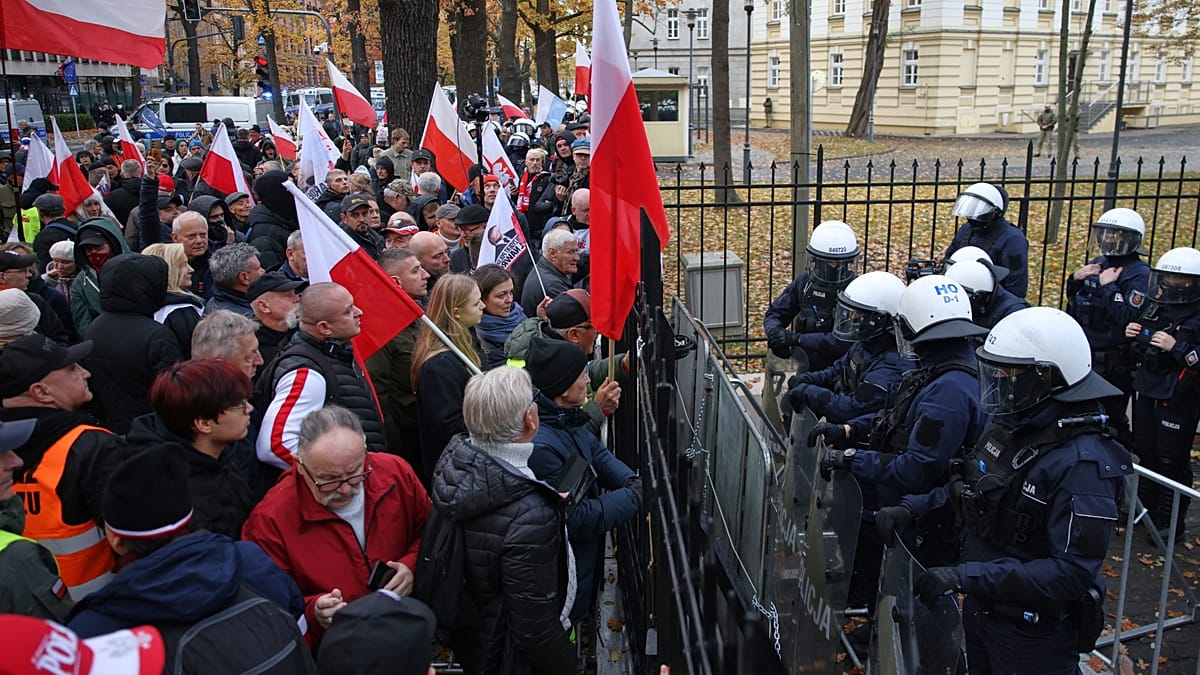
Poland's Constitutional Tribunal has 15 positions and has been contested for a decade. The Law and Justice government that lost power in 2023 appointed three judges unlawfully and was widely seen to have brought the court under political control. Neither Donald Tusk's government nor the European Union recognises those appointments. Parliament began filling empty seats in March and has elected eight judges this year. Nawrocki has refused to swear five of them in, citing concerns over how they were chosen.
On Friday 30 October the court's website announced a break in the duties of its chief justice, Bogdan Święczkowski, and his deputy, Bartłomiej Sochański. Anna Korwin-Piotrowska said she had ordered it and was taking control as the longest-serving judge. She is one of the five Nawrocki has not sworn in, and her seniority rests on a career begun in 1995, not on service at the Tribunal. Seven of this year's judges got in that evening, while riot police kept Święczkowski out.
A general assembly is valid only if two thirds of the judges attend, which with 15 positions means 10. Eight came on Tuesday 3 November, all elected this year by the government's majority, five of them never sworn in. The eight ruled three judges unauthorised to attend: the two suspended, and Jarosław Wyrembak, who inherited a seat from a judge appointed unlawfully. That left 12 authorised, and two thirds of 12 is eight, exactly the number in the room.
The Tribunal's own account on X said Święczkowski remains chief justice and Korwin-Piotrowska is not a judge of the court. Everyone taking part, it said, is committing the crime of a coup d'état. Tusk's government answers that the crisis began with the president's refusal to swear in the judges parliament elected, which it says he is required to do. The European Commission said the appointments were the Sejm's to make; the International Commission of Jurists criticised the suspensions and the president's refusal.
On 6 November deputy prime minister Władysław Kosiniak-Kamysz proposed a constitutional reset: remove all 15 sitting judges. Each new one would need three fifths of the Sejm and Senate combined, where a Sejm majority now suffices. The president would consent to candidates in advance, and the oath would move to parliament. Amending the constitution needs three fifths of the Sejm and a simple majority in the Senate. Two of Tusk's coalition partners refuse to amend it alongside Law and Justice.
”Resolving the conflict is simple and can be achieved without amending the constitution”
The numbers
What the comparison shows
Where they agree
Both sides say the other has broken the law, and both present themselves as defending the rule of law. They date the illegality differently: Tusk's government to 2015, when Law and Justice appointed three judges unlawfully, and Nawrocki's side to this year's elections of judges and to the suspensions of 30 October. The International Commission of Jurists criticised both sides in the same statement.
Where they split
The appointments and the quorum are two different disputes. The European Commission answered the first, and said the appointments were the Sejm's to make. It spoke on 31 October, before the assembly met, and said nothing about the counting. On the counting, Ryszard Piotrowski, a constitutional scholar, called the meeting illegal, and Przemysław Rosati, who heads the Supreme Bar Council, said he doubted a lawful quorum had been reached. Marcin Matczak, who opposed Law and Justice's judicial changes, says the suspension itself had no legal basis. If suspending judges lowers the threshold, then whoever controls the suspensions controls the quorum.
What nobody is saying
The oath before the president is the step that seats a judge. Five of the eight have not taken it, so the membership the quorum was counted from is itself disputed. Two sets of people now claim to speak for the Tribunal. Nothing in the sources says which of them an ordinary court, a ministry or a litigant should obey, or what happens to cases already pending. The way out proposed on 6 November needs a constitutional amendment, and that needs three fifths of the Sejm and a simple majority in the Senate. Two of Tusk's coalition partners have refused to vote for one alongside Law and Justice.
Who says what
He puts the cause of the crisis on the president and says the remedy is simple. In a social media post on 2 November he wrote that the president should recognise the judges lawfully elected by the Sejm, as the constitution provides, and that they would then take up their duties at the Tribunal. He accused Nawrocki of opting for a forceful confrontation that could cost Poland dearly.
”Resolving the conflict is simple and can be achieved without amending the constitution”Resolving the conflict is simple and can be achieved without amending the constitution
He does not recognise the judges now claiming the court. He has refused to swear in five of the eight, got into the Tribunal while riot police kept the chief justice out, and clashed physically and verbally with Korwin-Piotrowska. On 3 November, in public remarks before a National Security Council meeting he had called before the crisis, he said Tusk bears full responsibility for the illegal actions at the Tribunal.
”illegally taking over the Constitutional Tribunal”illegally taking over the Constitutional Tribunal
He rejects his own suspension and the authority of those who ordered it. Appointed under Law and Justice, he does not recognise the judges parliament elected this year, and riot police kept him out of the building on 30 October. Polsat News reported him calling the assembly of 3 November a social gathering and Korwin-Piotrowska a usurper with no right to convene a general assembly; he and Nawrocki have called the takeover a coup d'état.
He defends the takeover as repair rather than capture. Speaking to the broadcaster TVN on 3 November, before the general assembly met, he said the steps Korwin-Piotrowska was taking were the only way to rebuild the Tribunal's independence. The government's wider case is that the court has not been legitimate for a decade, since Law and Justice appointed judges unlawfully and brought it under political influence.
”to rebuild the independence of the tribunal”to rebuild the independence of the tribunal
He opposed Law and Justice's judicial changes and says this suspension still has no legal footing. He wrote on social media that the article invoked on the court's website belongs to the law on the ordinary courts, where the justice minister has an oversight he does not have over the Tribunal. He called the legal basis for suspending Święczkowski nonexistent, and said he had never expected to end up defending him.
”I consider Bogdan Święczkowski to be the worst person to serve as the president of the TK”I consider Bogdan Święczkowski to be the worst person to serve as the president of the TK
Our coverage
- Tusk urges Nawrocki to swear in judges as Poland's top court standoff turns violentTuesday, 3 November 2026
- EU Commission says Poland's parliament has the right to name constitutional court judgesMonday, 2 November 2026
- Poland's president holds his own crisis talks as constitutional court standoff deepensSunday, 1 November 2026
- Poland's top court descends into chaos as rival judges both claim to lead itSaturday, 31 October 2026