Pay deals and the right to bargain
Article 15 of the 2026 finance law leaves the pay rise for 2026 to 2028 to a decree, in the private sector as well as the public one, and the general strike the UGTT called against it was never held. With the national round closed, the disputes have moved down to single sectors and to agreements signed years ago.
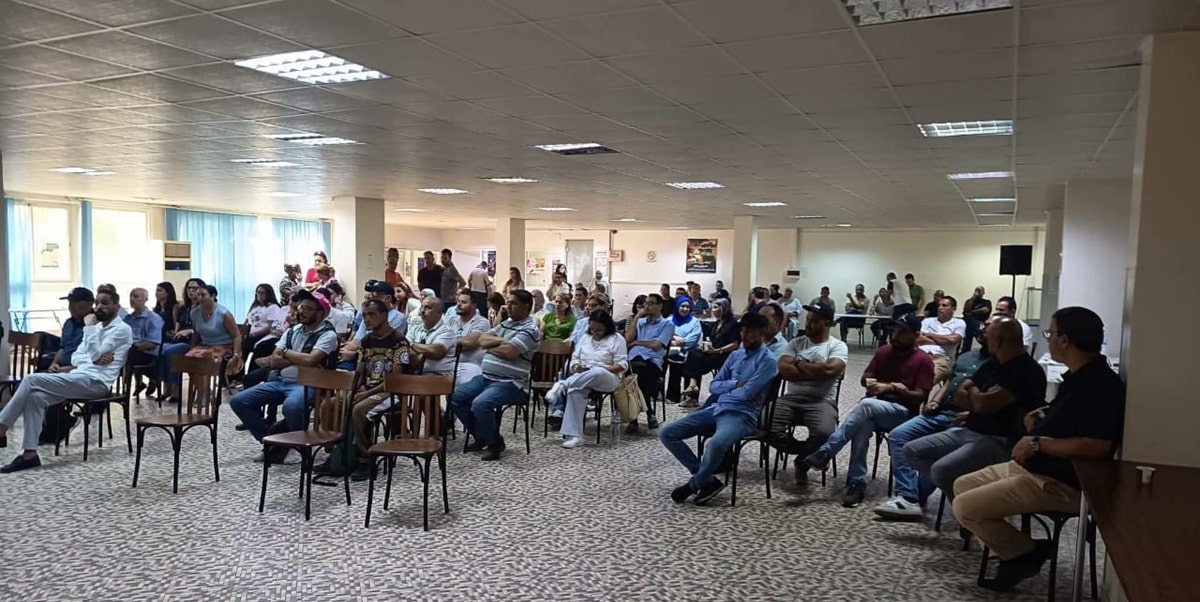
In the fuel haulage dispute of August 2026 the two sides never sat at the same table. The industry ministry met the company owners on one side, the general federation of petroleum met the workers on the other, and the joint meeting that was meant to follow never happened. On 22 August the federation said it would file a strike notice to force the application of agreements already signed. Talks with the companies were due to resume on 24 August.
Article 15 of the 2026 finance law, promulgated on 12 December 2025, raises wages and salaries in the public and private sectors for 2026, 2027 and 2028, extends the rise to pensions, and leaves the amount to a decree. Decree 68 followed on 30 April, giving 5 percent on base pay and on the transport and attendance allowances to non-agricultural sectors bound by collective agreements. Each of the three yearly rises is backdated to 1 January of its own year.
Until then the rise was negotiated every three years by the government, the UGTT and the employers' federation UTICA, a mechanism in place since the 1970s. Kapitalis dates the breakdown of that dialogue to 2021. The union wrote to the head of government Sarra Zaafrani on 22 November 2025 to demand talks, and called article 15 a historic precedent that threatened the foundations of the Tunisian social model. It says more than fifteen of its letters have gone unanswered.
The last negotiated round was worth 195 to 300 dinars a grade and ran from 2022 to 2025. This one reaches state employees as fixed premiums of 90 to 120 dinars spread over three years, while INS put inflation at 5.1 percent in July 2026. Public pay costs 25.267 billion dinars in the 2026 budget, which La Presse puts at 13 to 14 percent of GDP. The social affairs minister Issam Lahmar says a decree is one of the three routes labour law allows.
The UGTT voted a general strike on 5 December 2025 for 21 January 2026. It was called off on 13 January: the secretary-general had resigned, so nobody could sign the notice. In May its leadership still spoke of a general strike as a possibility. The pressure moved to the sectors. Municipal workers want a promised statute issued and an allowance paid, Gafsa phosphate staff want the rises of 2015 to 2017 put into base pay, and the drivers who blocked Radès on 20 August walked out without the union.
With the national rise fixed by decree, the conflict reappeared one sector at a time, and over agreements already signed. The UGTT's private-sector department filed a strike notice for heavy-goods drivers carrying hydrocarbons on 23 and 24 September 2026, citing a failure to respect previous agreements: social cover with the CNSS, and application of an agreement reached on 2 May 2019. The employers' side disputes nearly every part of that. Fethi Zouari, who heads the national chamber for the transport of dangerous goods, said on Diwan FM that most drivers would not join, that the companies had received no legal strike notice under article 376 and following of the Labour Code, that the late CNSS contributions came from the financial difficulties of two firms and had been settled several weeks earlier, and that the 2 May 2019 agreement had been abandoned and cancelled years ago. So the two sides do not even agree that the agreement being invoked still exists, which is what bargaining looks like once the national round is no longer held.
”The increases decided do not answer the deterioration in purchasing power and the rise in the cost of living”
The numbers
What the comparison shows
Where they agree
Neither side claims the 2026 rise was negotiated. The social affairs minister says a decree is one of the three routes labour law allows, and that this rise took a legal one. The UGTT's letter of 22 November 2025 calls the same article a historic precedent that threatens the foundations of the Tunisian social model.
Where they split
The minister argues about the route, the department about the form. Issam Lahmar says a decree is one of three ways labour law allows a rise, so the law was followed. The UGTT's department for public offices and enterprises says a fixed premium of 90 to 120 dinars leaves base pay untouched, where the old rises were a percentage of base pay and lifted the other premiums and benefits with them.
What nobody is saying
Nobody says what happens to an agreement that is signed and then not applied. Article 15 changed who fixes the rise, and it does not reach that question. In fuel haulage the meeting that would have put the state, the employers and the workers in one room was arranged and never held, and each side went on seeing the ministry alone.
Who says what
He says the authorities do not want to destroy the UGTT but to tame it, and that they have kept it out of the social negotiations it used to lead, pay included. He reads the president's decision to announce the rise alone as an attempt to make any increase look like a favour granted from above rather than a deal.
”un simple décor dans l'espace public”a mere decoration in the public space
At a march in Sfax on 5 August 2026 he said the union would stay neither silent nor still. He also said it had gone past the social question and past wage rises, and listed water, electricity, health, transport and schooling as debts the state owes citizens.
He called the failure to hold the general strike a legal impossibility rather than a retreat, and said the resignation had left the union disorganised. The executive bureau would meet urgently, he said, and a new date would have to come from a majority of its members to carry weight.
He told a joint committee hearing in parliament on 11 November 2025 that the rise written into the 2026 finance bill had followed legal procedure. Labour law, he said, provides three routes to a pay rise: an individual contract, a law or decree, or a collective agreement reached through social negotiation.
It wants base pay in public enterprises revised, and rises that keep pace with inflation across 2026 to 2028. It asked for real social dialogue on the point, and got a decree instead.
”Les majorations décidées ne répondent pas à la détérioration du pouvoir d'achat et à la hausse du coût de la vie”The increases decided do not answer the deterioration in purchasing power and the rise in the cost of living
Our coverage
- STEG workers threaten strike over safety lapses and frozen pay talksFriday, 2 October 2026
- Tunisia's tourism office staff threaten legal action over cut bonuses and benefitsWednesday, 30 September 2026
- Fuel transporters' strike, over a stalled 2019 pay deal, runs its final dayThursday, 24 September 2026
- Fuel transport strike begins, employers dispute its legalityWednesday, 23 September 2026
- Agil says fuel is available despite transport strike, but some Tunis stations report running dryWednesday, 23 September 2026
- UGTT decides to escalate toward a general strike, accuses government of shutting down dialogueThursday, 17 September 2026
- UGTT weighs confirming general strike, widens coalition with lawyers and rights leagueThursday, 10 September 2026
- Gafsa phosphate workers set for three-day strike as pay demands go unansweredTuesday, 1 September 2026
- Gafsa phosphate strike goes ahead, most administrative staff walk outTuesday, 1 September 2026
- UGTT chief says union backs strikes across sectors, prepares national mobilizationSaturday, 29 August 2026
- Fuel transport federation to file strike notice for September 23-24Thursday, 27 August 2026
- CPG workers file strike notice for early SeptemberTuesday, 25 August 2026
- Fuel transporters prepare strike notice as wage talks continueMonday, 24 August 2026
- Fuel transport union threatens a new strike after Tunis shortagesSaturday, 22 August 2026
- A surprise fuel-truck strike disrupts Greater Tunis, then is called off the same dayThursday, 20 August 2026
- Gafsa phosphate workers give notice of a three-day strike in early SeptemberTuesday, 18 August 2026
- Municipal workers vote a two-day national strikeSunday, 9 August 2026