Tunisia

Prime Minister Sarra Zaafrani Zenzri chaired a ministerial meeting at the Kasbah on August 18 that launched drafting of the first legal texts for a structural reform of Tunisia's social security and healthcare systems. The plan covers pension schemes, wider coverage for informal-sector, agricultural and gig-economy workers, and stronger governance of the social funds. The government said urgent measures come first, followed by reforms rolled out in phases.
Wael Naouar, a Tunisian member of the Sumud Flotilla held since early March at Mornaguia prison, began a hunger strike on August 16 that he has named 'Sumud,' demanding his release and an end to the case against him. He is being investigated by the Tunis Economic and Financial Judicial Pole over alleged suspicious financial flows to the flotilla's steering committee, alongside allegations of forgery, fraud and money laundering. As of August 11, four flotilla activists remained in detention, according to the National Committee for the Defense of Flotilla Activists and Palestinian Rights.
Tunisia's National Institute of Statistics published data on August 18 showing the industrial production index up 1.5 percent year on year in the second quarter of 2026, and 2.9 percent over the first half. Agri-food and mechanical and electrical industries drove the gain and oil refining surged, while mining fell 9.9 percent and chemical industries fell 6.4 percent in the quarter.

The Ministry of Commerce and Export Development set maximum prices for bottled mineral water, effective Wednesday, after weeks of shortages driven by a heat wave that pushed demand up by about 30 percent. A 1.5-liter bottle is now capped at 850 millimes and a 2-liter bottle at 950 millimes, with wholesale and retail profit margins each capped at 15 percent. Distributors must use registered channels and show invoices on inspection.

Tunisia's food trade balance showed a surplus of 1,006.6 million dinars for the first seven months of 2026, the national agriculture observatory ONAGRI reported Wednesday, up 22.2 percent from 823.8 million dinars in the same period last year. The gain came mainly from a 43.4 percent jump in olive oil export volumes, even as the average export price fell 3 percent to 12.47 dinars per kilo. The import coverage rate stood at 121.5 percent.
Geopolitics

President Trump said on August 18 that no talks with Iran are scheduled, contradicting an earlier statement about back-channel contacts, while reasserting that a naval blockade near the Strait of Hormuz remains active. Iran and Oman continued negotiating terms to reopen the strait, and Iran's deputy foreign minister said the waterway will stay closed until the US lifts sanctions and port blockades under a June memorandum. The UAE separately reported detecting two Iranian ballistic missiles that landed at sea, and Israel struck a Syrian military base in Idlib.

The Trump administration sanctioned International Criminal Court President Tomoko Akane and prosecutor Abdoulaye Seye on August 18, freezing any US-based assets and barring US entities from dealing with them starting September 17. Secretary of State Marco Rubio said the move targets a court he called corrupt and politicized, for investigating alleged US actions in Afghanistan and issuing arrest warrants against Israeli officials over Gaza, though neither the US nor Israel is an ICC member. It expands a wider US sanctions campaign against the court.

The World Health Organization said on August 18 that DR Congo's Ebola outbreak has become the deadliest in the country's history, with over 5,000 confirmed infections and more than 2,320 deaths, surpassing the 2018-2020 outbreak. WHO Director-General Tedros Adhanom Ghebreyesus said the epidemic is spreading at unprecedented speed and is not yet under control, and that the Bundibugyo strain involved has no currently approved vaccine or treatment. The outbreak, declared in May, has now reached a sixth province.

Canadian Prime Minister Mark Carney and US President Trump spoke twice this week to try to reach a deal before a midnight Wednesday deadline, after which 50 percent US tariffs would hit roughly $20 billion of Canadian imports outside USMCA protections. Talks are stuck on auto tariffs, with Washington offering to cut Section 232 duties from 25 to 15 percent but rejecting Canada's request to count broader North American content. Carney called the negotiations intense and delicate, and trade groups warn of job losses in lumber, wine and dairy if no deal is reached.
Europe

Mykhailo Fedorov, Ukraine's defense minister until his dismissal in July, used a video address to call for a legal route to hold elections despite the war, a rare public challenge to Volodymyr Zelensky from a senior political figure. Ukrainian law currently bars elections under martial law, and Fedorov stopped short of declaring a candidacy. The address followed Zelensky's confirmation of Yevhen Khmara as permanent defense minister, closing off Fedorov's return, and a recent poll that put Fedorov ahead of Zelensky in a hypothetical runoff.
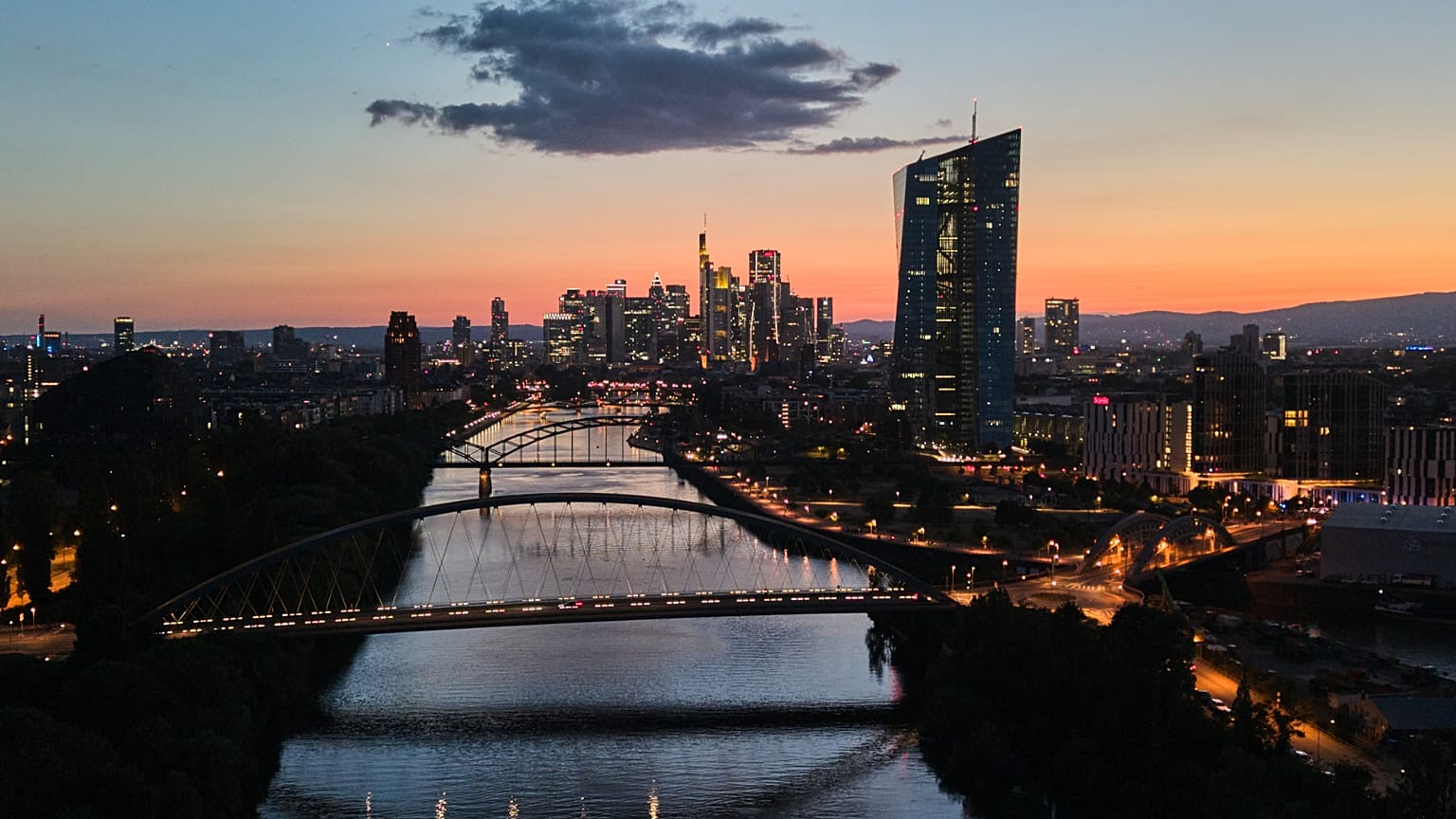
Government bond yields across Europe's largest economies jumped after US-Iran peace talks broke down, reviving inflation concerns. France's 10-year yield climbed to 4.10 percent, its highest since June 2009, while Germany's 10-year Bund yield passed 3.25 percent, its highest since March 2011. Brent crude rose to nearly $91 a barrel, and markets now price a 90 percent chance of an ECB rate hike in September.
Source:
Euronews · Tuesday, 18 August 2026
Italy's Interior Ministry says German aid organizations have brought about 22,500 migrants to Italian ports since October 2022, more than half of all private-vessel rescue arrivals in that period. Interior Minister Matteo Piantedosi said Italy will not discuss taking back migrants who first entered the EU through Italy until Germany addresses financial responsibility for those arrivals. The International Organization for Migration says at least 872 people have died or gone missing on the central Mediterranean route so far this year.
Source:
Euronews · Tuesday, 18 August 2026
Human-caused climate change added about 2 degrees Celsius of warming to the Mediterranean and 1.4 degrees to Western European seas this year, according to a World Weather Attribution analysis. The Mediterranean averaged a record 27C in July, and about 80 percent of the western Mediterranean and 90 percent of the Bay of Biscay experienced marine heatwave conditions, compared with roughly 40 percent without global warming. Scientists warn of mass die-offs of species such as corals and disruption to marine food chains.