South Lebanon after UNIFIL
The Security Council has told its peacekeeping force in Lebanon to stop operating on 31 December 2026. By mid-July 2026, on Security Council Report's account, it had still not discussed the three options its own Secretary-General put before it, beyond informal contacts among some members. What replaces UNIFIL turns on two questions nobody has settled: whether Israeli troops leave the ground they hold, and whether Hizbullah gives up its weapons.
On 28 August 2025 the Security Council adopted resolution 2790, extending the mandate of the United Nations Interim Force in Lebanon, UNIFIL, "for a final time", to 31 December 2026. The force must stop operating on that date, then wind down and withdraw within one year, that is by 31 December 2027. The same text called on Israel to pull back north of the Blue Line, the withdrawal line the United Nations drew in 2000, and to remove the buffer zones it had designated there. It also asked the Secretary-General for options, by 1 June 2026, on implementing resolution 1701 after UNIFIL. That is the 2006 text under which Lebanon undertook to keep the south free of weapons and armed groups.
UNIFIL is already smaller than it was when that vote was taken. The Secretary-General's reports put it at 10,372 military personnel in June 2025 and 8,005 in June 2026. Facing a funding squeeze across United Nations peacekeeping, the mission cut spending by 15 per cent, sent 2,094 soldiers home by February 2026 and handed one position to the Lebanese army by June 2026. Six more handovers are pending because the fighting has not stopped. None of that is the withdrawal the Council ordered, which begins only when the mandate ends.
The Secretary-General answered on 1 June 2026 with three options, all smaller than UNIFIL and each built around a core of unarmed United Nations military observers. That core numbers 350, 285 or 215, inside totals of roughly 5,525, 3,370 and 1,980 uniformed personnel. His letter counts uniformed personnel where his reports count UNIFIL in military personnel; each figure is as its document gives it. Only the largest option, the letter says, could put itself between the Israeli and Lebanese armies. Security Council Report, an independent research organisation, wrote on 15 July 2026 that some members appeared to have consulted informally, but that the Council had held no discussion of the options. France and Italy said on 25 June 2026 that they will co-lead an international coalition for Lebanon, whose contours, the same organisation wrote, are yet to be defined.
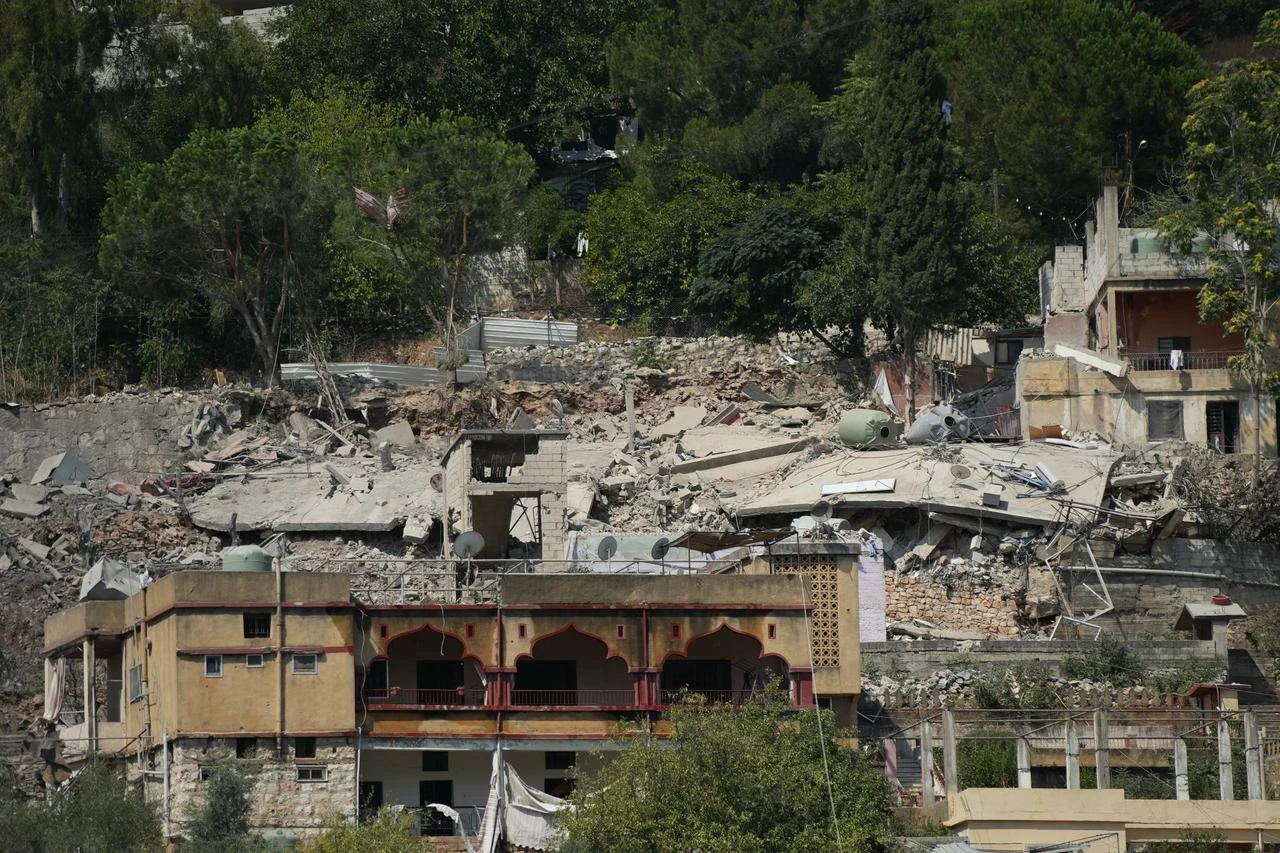
On 2 March 2026 Hizbullah attacked Israel. Israel struck southern Lebanon, the Bekaa and Beirut from the air, and pushed further north of the Blue Line. On 19 April 2026 its army published a map of a "forward defence line" up to 10 kilometres north of the Blue Line, taking in some 55 Lebanese villages. The Secretary-General calls that line a direct violation of Lebanon's sovereignty, and the Blue Line the applicable line of withdrawal. In remarks Al Jazeera reported on 14 August 2026, Israel's defence minister said his army holds 700 square kilometres of Lebanon, roughly 7 per cent of the country.
Lebanon, Israel and the United States signed a framework on 26 June 2026. Under it the Lebanese army restores state authority over Lebanese territory, pending the verified disarmament of non-state armed groups, so that Israeli forces can pull out of Lebanon in stages, starting with two pilot zones. That army had more than 9,000 soldiers south of the Litani in February 2026. After 2 March it said it was moving some of its border positions, given its limited resources. Hizbullah has rejected the framework, and its leader says no agreement resting on disarmament will pass.
”For our mission, Resolution 1701 remains our compass, guiding our actions, our decisions and our commitment to peace every single day.”
The numbers
What the comparison shows
Where they agree
No voice on this page proposes a successor to UNIFIL. Türkiye's president offers to join initiatives that support security in the region, and UNIFIL's force commander holds to the resolution his mission still serves. The rest argue over Israeli troops on Lebanese soil and Hizbullah's weapons.
Where they split
Israel's defence minister makes Hizbullah's disarmament the condition of any Israeli withdrawal. Hizbullah's leader says no agreement resting on disarmament will pass at all, so each has put the other's precondition out of reach. Lebanon's president and prime minister want both halves at once: one army under the state and an Israeli withdrawal, with the prime minister alone demanding a clear timetable. Hizbullah has rejected that course, and Israel ties it to a disarmament that has not happened. Türkiye's president offers to take part in every initiative launched to support security in the region; Lebanon's president says the Lebanese state negotiates alone.
What nobody is saying
The framework the three governments signed on 26 June 2026 mentions neither resolution 1701 nor the Security Council nor UNIFIL, on Security Council Report's reading of it. Verification in the pilot zones falls to a "mutually agreed-upon third-party entity", in the words Security Council Report quotes from the framework's security annex. That is a description, not a body.
Who says what
The Lebanese state negotiates alone and is sovereign in what it decides. He wants Israel out of every inch of Lebanese territory, under one state, one army and one authority.
”the Lebanese state is conducting the negotiations and is sovereign in its decisions; no one can act through us or at our expense”the Lebanese state is conducting the negotiations and is sovereign in its decisions; no one can act through us or at our expense
Lebanon pledged, in accepting resolution 1701 in 2006, to keep the south free of weapons and armed groups, and he says it has long put off what the Taif Agreement laid down: one army under the state. On 14 August 2026, Al Jazeera reported, he received the American ambassador and pressed for an end to the destruction, an end to the widening of the pilot zones, and a clear timetable for the Israeli withdrawal.
”we have long delayed implementing what was stipulated in the Taif Agreement”we have long delayed implementing what was stipulated in the Taif Agreement
No agreement resting on disarming Hizbullah will pass, and there are no pilot zones and no special security zones for Israel. He calls the government's course a surrender that gave away Lebanon's sovereignty, and wants it to admit that it has failed.
”تُصوب على المقاومة بدلا من التصويب على العدو وعدم التزامه بالاتفاقات”[the Lebanese authority] is aiming at the resistance instead of aiming at the enemy and its failure to abide by the agreements
Israel will not withdraw until Hizbullah is disarmed and the danger it poses is removed. He treats the ground his army holds as a security zone rather than a temporary position, and in remarks Al Jazeera reported on 14 August 2026 put it at 700 square kilometres.
”Israel has no intention of withdrawing from the Beaufort, which is an integral part of the security zone.”Israel has no intention of withdrawing from the Beaufort [castle], which is an integral part of the security zone.
Türkiye wants to take part in every initiative launched to support security in the region, and says its support for the Lebanese army will continue. He spoke in Ankara beside Lebanon's president, and offered Turkish help with rebuilding the south.
”we as Türkiye want to take part in all initiatives to be launched to support security in the region”we as Türkiye want to take part in all initiatives to be launched to support security in the region
He says the principles of resolution 1701 are more relevant than ever. He spoke on 11 August 2026, twenty years to the day after the resolution's adoption, at a ceremony in Naqoura where he led a tribute to seven peacekeepers killed in the months before it. UNIFIL's mandate ends on 31 December 2026.
”For our mission, Resolution 1701 remains our compass, guiding our actions, our decisions and our commitment to peace every single day.”For our mission, Resolution 1701 remains our compass, guiding our actions, our decisions and our commitment to peace every single day.
Our coverage
- The Arab League warns that Israeli strikes in Lebanon could derail the negotiationsMonday, 17 August 2026
- Lebanon's prime minister presses for a timetable for an Israeli withdrawalSaturday, 15 August 2026
- Lebanon and Israel remain split over Hezbollah disarmament at Rome talksThursday, 6 August 2026