Five years of Kais Saied
Five years after Kais Saied invoked emergency powers and suspended parliament, Tunisia has a new constitution, and no national vote since has drawn a third of the electorate. Through the summer of 2026 the state could not keep the water and the electricity running. In September 2026 three of the four bodies that won the 2015 Nobel Peace Prize for mediating Tunisia's transition re-formed to ask for another one.
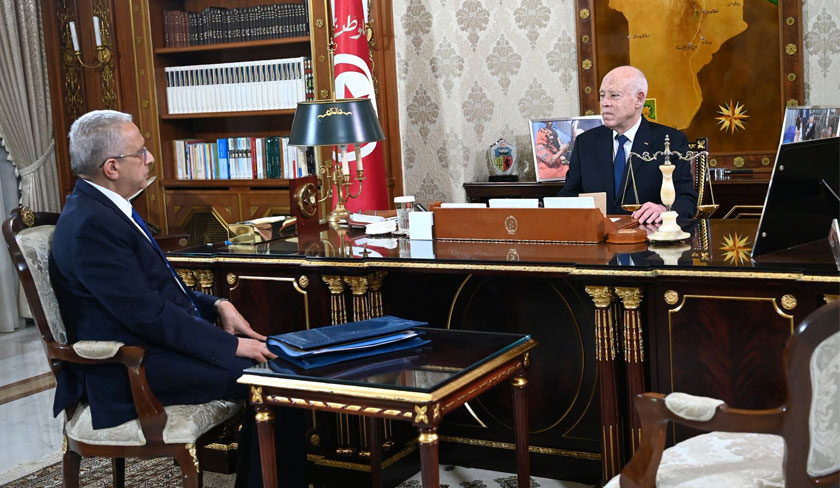
On 25 July 2021 President Kais Saied invoked Article 80 of the 2014 constitution. He suspended the work of parliament, lifted the immunity of its members and dismissed the head of government. The measures were presented as exceptional. Parliament was then dissolved, the Supreme Judicial Council with it, and Saied legislated by decree-law. A new constitution was approved by referendum in 2022. Four heads of government have served since, all appointed by Saied.
No national vote since has drawn a third of registered voters. The 2022 constitutional referendum drew 30.5 per cent on the electoral commission's revised count. The second round of the legislative elections drew 11.3 per cent in January 2023, on the commission president's figure that night. Saied was re-elected in the first round in October 2024, with 90.69 per cent of the votes cast on a turnout of 28.8 per cent. A by-election in El Kabaria, in Tunis, brought 2,520 of 60,111 registered voters out on 19 July 2026.
The Central Bank of Tunisia revises its national accounts between reports, so figures from different editions do not line up. Its 2025 report puts public debt at 82.1 per cent of GDP. Investment was 15.5 per cent of GDP in 2025; the 2022 report had put it at 16.0 per cent for 2021. The tax burden went the other way, from 23.3 per cent to 25.9. The OECD counts compulsory social contributions as taxes and puts Tunisia at 34.0 per cent for 2023, highest of 38 African countries.
The anniversary, 25 July 2026, fell after weeks of exceptional heat. STEG, the state electricity and gas company, ran rolling cuts across several regions and water supply was disrupted, Webdo reported. That morning supporters of the president gathered outside the Municipal Theatre in Tunis with songs and slogans. In the late afternoon, Webdo cited Agence France-Presse for a march of more than 2,500 people through central Tunis, against the cuts, the cost of living, the prosecution of opponents and the narrowing of public freedoms.
Marchers on 25 July chanted that there was neither water nor electricity, only prison and higher prices, Webdo reported. Hamza Meddeb argues the anger is real but lands on the state electricity and water companies, sometimes on the government, never on the presidency. Arab Barometer's survey of 1,023 Tunisians in late 2025 found 44 per cent expressing a great deal or quite a lot of trust in the government, the highest since 2011. Al Jazeera reports nearly all of the government's critics are jailed or in exile.
An organised counterweight reappeared in September 2026, and who is in it says as much as what it asks. On Thursday 3 September the Tunisian League for Human Rights, the national bar association and the UGTT launched a joint coordination framework for Tunisia and Tunisians, under a statement titled Tunisia first, and the people above every other consideration. Those are three of the four bodies that shared the 2015 Nobel Peace Prize for mediating the transition after 2013. The fourth, the employers' union UTICA, is not in it: Kapitalis says it does not know whether UTICA was asked, and notes that the organisation's leadership is contested for want of a congress in several years. The three blame those in power for a political, economic and social crisis, for a rollback of rights and freedoms, for an instrumentalised justice, for detention conditions they call unworthy and for declining media freedom. Their statement says there is no way out of the present situation except a wholesale revision of economic, social and political choices, and that the framework stays permanently open to all democratic forces. It was signed by Bassem Trifi for the league, Boubaker Ben Thabet as head of the bar and Slaheddine Selmi for the UGTT.
”That anger has to go somewhere and it's being aimed at the state-owned electricity and water companies, sometimes it's aimed at the government, but never at the one figure who has control: the president.”
The numbers
What the comparison shows
Where they agree
Selmi, Bouderbala and Meddeb treat the failures of water and electricity as the central fact of the summer. Saied and Louzir put the public finances at the centre instead, Saied as borrowing that brought Tunisians no benefit, Louzir as a tax system reaching its limits. Aidoudi puts the interior regions and the standing of parliament at the centre. Four of the six call for change of some kind, whether they call it reform, a revision of public policy, a revision of development choices or a rebuilding of public services. Meddeb describes the situation rather than proposing a way out.
Where they split
On 27 July the assembly sat on the water and electricity cuts. Its speaker, Brahim Bouderbala, said the way through was to lean on the institutions of the state and on citizens, pressed for radical reforms, and urged members not to give in to pessimism. Ammar Aidoudi, a member for Kasserine, told the assembly the same day that its role has retreated and that the executive does not take up members' proposals. He said invitations to the president to visit the interior went unanswered. Saied, speaking a week earlier about the 2026-2030 development plan, blamed no one: the debts piled up without benefiting Tunisians, Tunisia repaid them on time, and they should now be turned into investment.
What nobody is saying
The El Kabaria seat belongs to the chamber Brahim Bouderbala chairs and Ammar Aidoudi sits in, and neither of them mentioned the by-election. Between the preliminary count of 19 July and certification on 10 August the margin narrowed from seven votes to two, and the reports of ISIE's announcement give no reason for the change. What a turnout of 4.19 per cent does to the standing of that chamber has not been argued in public by any of the names on this page.
Who says what
In a speech for the 69th anniversary of the Republic, broadcast on the UGTT's official page, Selmi called for a revision of public policy and of economic choices. He said falling purchasing power, the rising cost of living and the degradation of public services, in health, education, transport, electricity, water, medicines and the social funds, amount to a deep crisis. He rejected the partial or total sale of public enterprises and asked for investment and reform instead. He said running public affairs without sufficient consultation with the national organisations and civil society does not resolve the difficulties, and called for more dialogue.
Meeting the head of government, the economy minister and the central bank governor at Carthage on 20 July, on the law approving the 2026-2030 development plan, Saied said debts had piled up without benefiting Tunisians, and that Tunisia had met all its obligations without any delay in repayment. He called for those debts to be converted into investment to rebuild public services.
”La Tunisie a honoré tous ses engagements et n'a accusé aucun retard dans le remboursement de ses obligations”Tunisia has honoured all its commitments and has been late on none of its repayment obligations
Opening a plenary session on the water and electricity cuts on 27 July, Bouderbala argued that the crisis should be met by relying on state institutions and citizen engagement. He pressed for radical reforms, with short-term action plans and an overall strategy for the medium and long term. He urged members not to give in to pessimism, saying other countries had faced similar crises and recovered through sound management.
Speaking in the plenary session on public affairs on 27 July, Aidoudi criticised what he called the retreat of parliament's role, and accused the executive of not engaging with the assembly and of not taking up members' proposals on regional concerns. He said members had become marginalised, and that invitations to the president to visit interior regions had gone unanswered. He said the development plan did not answer the interior regions' expectations and entrenched inequity in the distribution of projects, above all in the Kasserine governorate, and that several of its projects had been announced before. Social, regional and distributive justice had not been achieved, he said, and he called for the development choices to be revised.
Meddeb describes censorship across the board, and says livestock are dying, restaurants closing, the sick suffering and some of the old dying. Al Jazeera reports power cuts of up to twelve hours.
”That anger has to go somewhere and it's being aimed at the state-owned electricity and water companies, sometimes it's aimed at the government, but never at the one figure who has control: the president.”That anger has to go somewhere and it's being aimed at the state-owned electricity and water companies, sometimes it's aimed at the government, but never at the one figure who has control: the president.
Presenting the 2026 finance law at an information day in Tunis on 8 January 2026, Louzir warned that the tax system is beginning to reach its limits. He called the law innovative and meant it sarcastically: it runs to 110 articles, half of them proposed by members of parliament, and it legislates pay rises directly instead of leaving them to bargaining between unions and employers. On value added tax he set out a calculation: on a market GDP estimated at 132 billion dinars and an average rate of 15 per cent, the state should collect close to 20 billion dinars, while actual receipts stall between 11 and 12 billion.
”Cependant, le système fiscal commence à atteindre ses limites, avec une pression fiscale désormais comparable à celle de nombreux pays de l'OCDE et largement supérieure à celle des pays africains”However, the tax system is beginning to reach its limits, with a tax burden now comparable to that of many OECD countries and well above that of African countries
Our coverage
- Saied calls public health system "targeted, even destroyed"Saturday, 19 September 2026
- UGTT, bar association and rights league launch joint 'Tunisia first' frameworkThursday, 3 September 2026
- Tunisian magistrates' association says government suspending judges without payWednesday, 2 September 2026
- Five years after Saied's power grab, Tunisians say old grievances never leftTuesday, 1 September 2026
- 127 judges promoted by presidential decree, 13 to key military justice postsFriday, 28 August 2026
- Tunisia's jailed opposition leaders: one stable, one still fragileSaturday, 22 August 2026
- Protests enter second month as Tunisia logs a record wave of unrestFriday, 21 August 2026
- Four readings of a record month, and a count that won't take a sideFriday, 21 August 2026
- The PDL sets its congress for 3 October, the day Abir Moussi was arrestedThursday, 13 August 2026
- Appeals cut the Kabaria by-election margin from seven votes to twoTuesday, 11 August 2026
- Tunisians rate the economy better than at any point since 2011, and half have skipped a mealSunday, 9 August 2026
- Five years into one-man rule, Tunisian anger stays below the surfaceSaturday, 1 August 2026
- Five years after the power grab: investment at rock bottom, tax burden upTuesday, 28 July 2026
- No presidential address on Republic Day as Saied's public silence becomes routineMonday, 27 July 2026
- Thousands march in Tunis five years after Saied's seizure of powersMonday, 27 July 2026
- A few dozen Saied supporters celebrate July 25 outside the Municipal TheatreSunday, 26 July 2026
- Parliament ties the Republic's 69th anniversary to Saied's "new Republic"Sunday, 26 July 2026
- Thousands march on Habib Bourguiba Avenue five years after Saied's power grabSunday, 26 July 2026
- Saied pardons 2,439 prisoners before Republic Day, including his 2024 election rivalSaturday, 25 July 2026
- UGTT leader's verdict on five years of Saïed's rule: "the exact opposite of the promises"Friday, 24 July 2026
- Saïed pardons 2,439 prisoners for Republic Day; Zammel and Jary reported freedFriday, 24 July 2026
- Seven votes decide the El Kabaria parliamentary by-election in TunisTuesday, 21 July 2026
- Carthage's silence became the best soil for rumourMonday, 20 July 2026
- El Kabaria by-election decided by seven votes, in near-empty polling stationsMonday, 20 July 2026
- Saïed resurfaces after ten days of silence, with no explanation for his absenceSunday, 19 July 2026
- Saied unseen in public for ten days as an Italian daily reports a cardiac episodeSaturday, 18 July 2026