Europe's rearmament
Europe has given itself until 2030 to be able to defend itself. The EU's credit line is open and paying out, and the military associations say their armies cannot recruit or keep enough people.
The European Commission's rearmament plan has the deadline in its name: ReArm Europe, or Readiness 2030. Its first pillar is SAFE, a credit line of up to 150 billion euros for member states buying defence equipment. NATO's deadline falls later. At The Hague in June 2025, allies committed to invest 5 percent of GDP a year by 2035, at least 3.5 percent on core defence and up to 1.5 percent on critical infrastructure, networks, civil preparedness, innovation and the defence industry. The trajectory is due to be reviewed in 2029.
The SAFE regulation entered into force on 29 May 2025. The Commission has since endorsed national investment plans from 18 member states, and lists Hungary's as still under evaluation. Its own timeline puts the first disbursement a year later: 6.56 billion euros to Poland on 29 May 2026. Italy held out. The Commission proposed its 14.9 billion euros in January 2026, and Italy answered only on 28 July, when foreign minister Antonio Tajani told a parliamentary hearing that Rome would ask for the full amount before the year ended.
Andrius Kubilius, the EU's defence commissioner, said in February 2026 that Europe must be able to move about 100,000 soldiers and their equipment fast, matching a Russian build-up of the same size. The European Parliament warned in 2024 that European armed forces face severe recruitment and retention problems. In a Euromil survey reported by Euronews in August 2026, most military associations called recruitment in their country problematic, and keeping personnel problematic or critical.
Germany's defence ministry has costed a long-range strike programme at almost 12 billion euros, according to internal documents cited by Politico. It wants a cheap, mass-producible cruise missile in service from 2027, and American Tomahawks by the end of the decade. The two systems being built with Britain, a cruise missile and a hypersonic glider reaching beyond 2,000 kilometres, are scheduled for the mid-2030s, well after the readiness date. The funding is not approved. The sums sit in the government's fiscal planning and have to pass the Bundestag.
A three-page Pentagon questionnaire obtained by Al Jazeera asks allies whether they have publicly supported American foreign policy priorities, and whether they have restricted access to American bases or military overflights. Al Jazeera published it on 19 August 2026 and says the markings and phrasing suggest it is meant to guide American officials during a six-month review of US forces in Europe, still under way. SAFE lends for equipment, not for people. A Commission official told Euronews that recruitment and retention stay with each member state.
”To match a 100,000-army build up, we would need to move similar numbers of soldiers and equipment, and fast.”
The numbers
What the comparison shows
Where they agree
The date and the shortage are both agreed. The Commission named its plan Readiness 2030, and Kubilius works to the same year. The finding that European armies cannot recruit or keep enough people comes from the armies' own personnel associations, not from opponents of rearmament.
Where they split
The disagreement is about whose job the shortage is. Jacob's answer is that the investment only becomes capability if there are people to absorb it. The Commission's answer, given to Euronews by an official, is that recruitment and retention belong to member states. Rome's answer is narrower again: Crosetto told the July hearing that SAFE finances military spending already in the budget rather than adding to it.
What nobody is saying
None of the sources on this page say how many soldiers Europe has now. Kubilius's 100,000 is the number Europe would need to be able to move, not a recruitment target, and nothing here measures the distance between that and what Europe can move today. The figures that do get published are all money: a share of GDP, a credit line, a procurement plan.
Who says what
Kubilius takes the date from intelligence services, which he says expect Russia to be ready and willing to test NATO by 2030. His scenario is 100,000 Russian soldiers massing at the EU and NATO border. He asks for the ability to move forces on that scale, not for an army of that size.
”To match a 100,000-army build up, we would need to move similar numbers of soldiers and equipment, and fast.”To match a 100,000-army build up, we would need to move similar numbers of soldiers and equipment, and fast.
Jacob says the shortage of personnel is not new, and that what has changed is the urgency, because the money is arriving now.
”At the end of the day we need to have enough people to deal with these investments.”At the end of the day we need to have enough people to deal with these investments.
Tajani treats the question as settled: Italy will request 14.9 billion euros. Eunews notes what Rome has actually accepted, a loan it has to repay, although one that will not count towards its debt under the common rules.
Our coverage
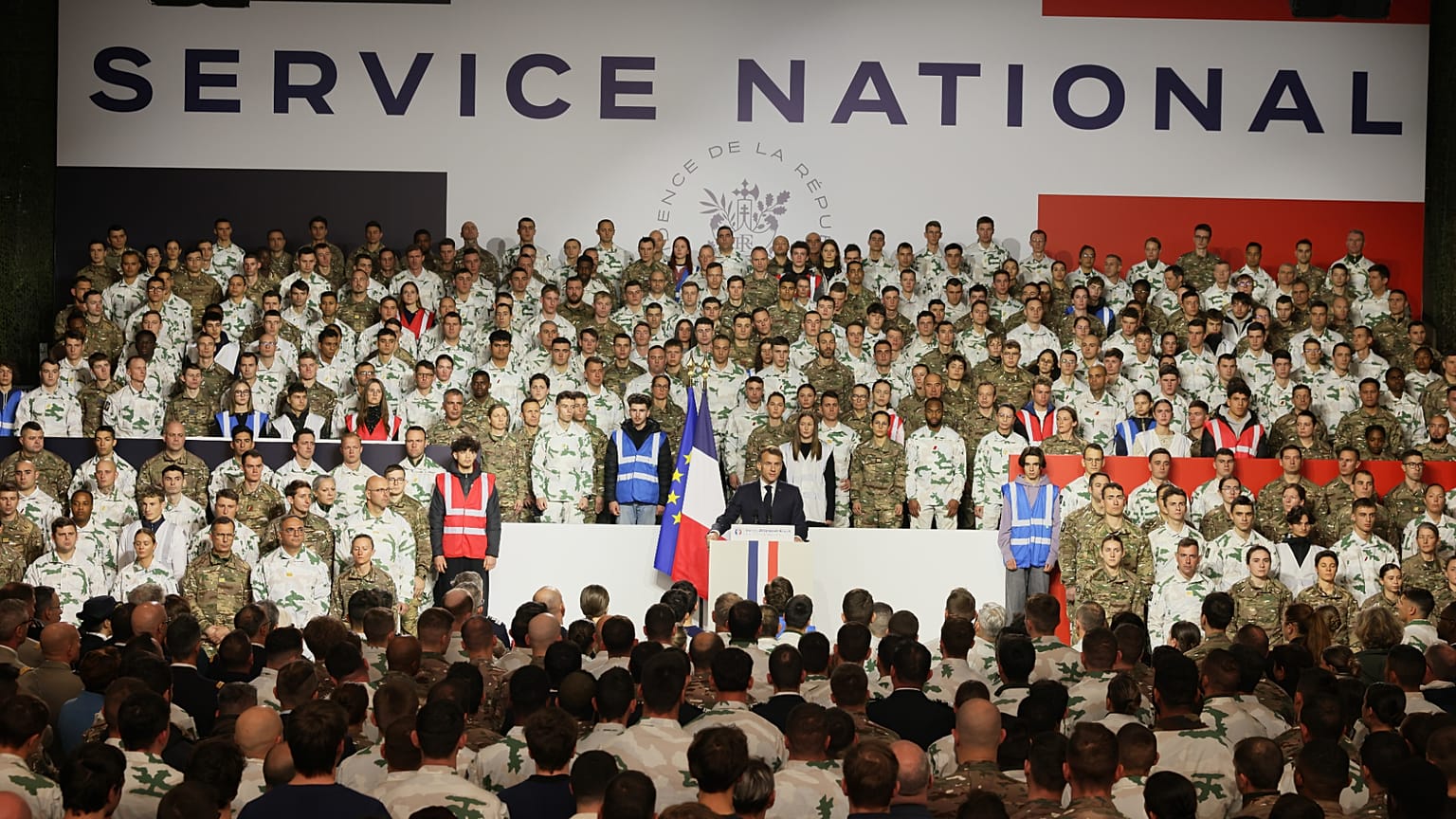
- France launches first cohort of new voluntary military serviceTuesday, 1 September 2026
- US defence firm reportedly plans medium-range missile plant near LeipzigMonday, 31 August 2026
- Germany plans €12bn long-range missile arsenal to deter RussiaSunday, 23 August 2026
- Europe struggles to recruit the 100,000 troops its defence chief wants ready by 2030Saturday, 22 August 2026
- The Pentagon asks NATO members how loyal they are to Washington's lineThursday, 20 August 2026
- Rome stalls on its 14.9 billion euros in EU defence loans and Brussels loses patienceWednesday, 29 July 2026