The EU's 2028-2034 budget and the unanimity it has to win
The EU's next seven-year budget needs all 27 governments to say yes, and after two rejected compromises the leaders meet again on Thursday 26 November.
The European Union sets its spending ceilings seven years at a time, in what the treaties call the multiannual financial framework. Article 312 of the Treaty on the Functioning of the European Union says the Council adopts it by a special legislative procedure, acting unanimously, once the European Parliament has consented by a majority of its own members. So the framework for 2028 to 2034 needs all 27 governments, and the Commission's draft of nearly 2,000 billion euros is the largest ever put on the table.
Two camps have formed. Six net contributors, Germany, Austria, Denmark, Finland, the Netherlands and Sweden, want cuts of several hundred billion euros and more money for competitiveness and defence; they are known as the frugals and prefer the name modernisers. Against them, 17 countries from southern, central and eastern Europe formed the Friends of Cohesion, and the group is big enough that earlier compromises barely touched regional and farm funding. France, the second largest economy and a net contributor, has picked neither side.
Two compromises have already been rejected. Cyprus cut the draft by 2 percent and the frugals threw it out, Euronews reported in August. Ireland, holding the Council presidency, proposed cutting 141 billion euros on Saturday 10 October, 8 percent in 2025 prices. The cut fell hardest on international aid, 17 percent, and lightest on farming and regional development, 3 percent. Merz said the budget must be affordable for the countries financing it; MEPs said the cuts went too far. The summit on Thursday 15 October largely rejected the plan.
Costa took over the negotiation and published his own text on Saturday 21 November. It cuts the budget to 1,780 billion euros in current prices, 204 billion or about 10 percent below the Commission's draft, and it cuts cohesion funding for the first time. New EU-wide taxes are meant to raise 64 billion a year, led by a 3 percent levy on digital services that already exists in France, Spain and Italy. A source at the Elysee called the text very disappointing and no basis for agreement.
Merz wrote to Costa that fresh money for Ukraine is an essential prerequisite for approving the budget, which Slovakia, the Czech Republic, Hungary and Bulgaria refuse. Kyiv faces a 70 billion euro shortfall in 2027, before any money from the next budget can arrive. But Article 312 says what happens if the 27 never agree: the current ceilings and other provisions roll over until a new regulation is adopted. The Union does not run out of budget, it runs out of new programmes.
”Just as Mr Merz talks about using his veto, I can say exactly the same. We have the same veto power as the German federal chancellor”
The numbers
What the comparison shows
Where they agree
Every compromise so far has cut the Commission's draft rather than replaced it. Cyprus took 2 percent off it. Ireland's cut was 141 billion euros in 2025 prices and Costa's is 204 billion in current prices, two different price bases rather than one progression.
Where they split
Six net contributors, known as the frugals, want several hundred billion cut and the money moved to competitiveness and defence. Seventeen countries want regional and farm funding protected, and Costa's proposal is the first to cut it. The new EU-wide taxes split the 27 differently again, and the objection Euronews reports most often is fear of American retaliation over the digital levy. Cutting across all of it is Merz's condition, that fresh Ukraine money comes first. The four governments refusing it are all Friends of Cohesion, and Euronews reports that the frugals resent them opting out of Ukraine support while asking for cohesion money. France has endorsed neither camp.
What nobody is saying
One member state is placed by none of these reports. Euronews of 15 October put France, Belgium and Luxembourg between the two camps, and the six, the 17 and those three come to 26 of 27. No source breaks the current framework into the annual ceilings Article 312 would roll over, so what a rollover would fund is not on the record. MEPs rejected the Irish cuts in October, no source here gives the Parliament's position on Costa's text, and the framework cannot be adopted without its consent.
Who says what
He is the one who has to assemble 27 yes votes, and he took the file over after the Irish presidency's plan failed. He argues the budget has to be settled in 2026 so the legislation can be written in 2027 and the money can move on 1 January 2028. His own proposal cuts 204 billion euros, touches cohesion for the first time, and would raise 64 billion a year from new EU-wide taxes.
”I am confident that this proposal is a good basis for moving towards a final agreement for three reasons. First, this is a budget that matches our ambitions. Second, it keeps national contributions within reasonable limits. And third, it includes a balanced basket of new own resources”I am confident that this proposal is a good basis for moving towards a final agreement for three reasons. First, this is a budget that matches our ambitions. Second, it keeps national contributions within reasonable limits. And third, it includes a balanced basket of new own resources
He leads the countries demanding the deepest cuts and he has added a second condition. He called the Commission's draft not acceptable and said the Irish plan's size was not a basis for agreement. In November he wrote to Costa that fresh financial support for Ukraine is an essential prerequisite for approving the budget, which binds two files that each need every member state.
”Supporting Ukraine is a matter of our indivisible European security, and so must be the burden sharing for that support”Supporting Ukraine is a matter of our indivisible European security, and so must be the burden sharing for that support
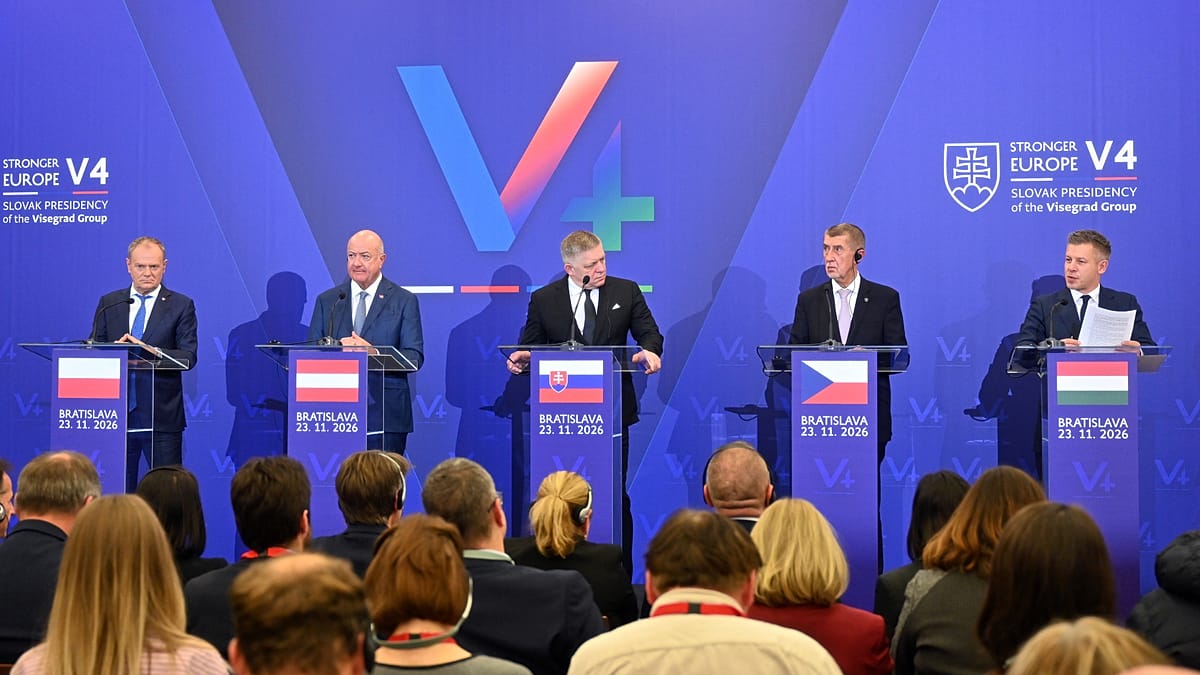
He rejects the Ukraine condition and says so in the language of the veto. Speaking in Bratislava on Tuesday 10 November as he welcomed Andrej Babis, he called Merz's move a textbook case of blackmail and said Slovakia is a sovereign country with its own views. Slovakia is one of three states that secured exemptions from the existing 90 billion euro support loan for Ukraine.
”Just as Mr Merz talks about using his veto, I can say exactly the same. We have the same veto power as the German federal chancellor”Just as Mr Merz talks about using his veto, I can say exactly the same. We have the same veto power as the German federal chancellor
He is the clearest voice against the December deadline, and he speaks for one of the six countries pressing for the deepest cuts. At the summit on Thursday 15 October he said an agreement was not coming that month or the next, doubted one was possible before the end of the year, and said he was not in a hurry. Sweden was left out of Costa's tour of capitals in August because of its own general election.
”We are not reaching an agreement this month. Not next month. I don't know even if it's possible to reach an agreement before the end of the year”We are not reaching an agreement this month. Not next month. I don't know even if it's possible to reach an agreement before the end of the year
He put the presidency's compromise on the table and defended it on the grounds that nobody gets everything. Ireland's draft cut 141 billion euros, 8 percent in 2025 prices, protecting agriculture and regional funds and cutting international aid hardest. He said he hoped for a deal by Christmas.
”Nobody's going to get everything that they wanted in any proposal, but we think that there is something there for all of the member states”Nobody's going to get everything that they wanted in any proposal, but we think that there is something there for all of the member states
She argues the digital levy is about fairness inside the single market rather than revenue alone. The Parliament proposed the levy before Costa adopted it. Opposition to it stems mostly from fear of American trade retaliation.
”These measures would also help create a level playing field in the single market, where American digital giants often face lower taxes than European firms”These measures would also help create a level playing field in the single market, where American digital giants often face lower taxes than European firms
Our coverage
- Visegrád Four leaders split over Ukraine funding as EU weighs 204bn-euro budget cutTuesday, 24 November 2026
- European Council president pitches 204-billion-euro cut and Big Tech tax to break budget deadlock, France rejects itSunday, 22 November 2026
- Four countries defy Merz in EU budget fight over Ukraine aidWednesday, 11 November 2026
- EU budget summit ends without breakthrough; special summit set for 26 NovemberFriday, 16 October 2026
- EU leaders head into summit divided over seven-year budget; draft conclusions regret US move on Russian dieselThursday, 15 October 2026
- Ireland proposes 141-billion-euro cut to EU's next long-term budget; Germany says it's not enoughMonday, 12 October 2026
- Six EU states warn they won't back the bloc's next long-term budget without deep cutsSunday, 11 October 2026
- Costa tours EU capitals as Germany and Sweden press for deeper budget cutsThursday, 27 August 2026