Tunisia
Defense Minister Khaled Shili received US Navy Sixth Fleet commander Admiral Jeffrey Anderson on 16 September, with talks focused on deepening military cooperation between Tunis and Washington, particularly at sea, the ministry said. The visit coincided with Phoenix Express, a multinational maritime exercise the US Africa Command has held most years since 2004 with Tunisian and allied forces in the Mediterranean, this year for the 21st time.
Tunisia's UGTT labor union confederation decided on 9 September to draw up a plan of escalating action working up to a general strike, accusing the government of worsening the economic and social crisis and closing off dialogue during the 2027 budget process. The union is also demanding the release of members it says are being prosecuted for their union activity. It is not the first such threat: a strike over the 2026-2028 pay rise, which was likewise fixed by decree rather than negotiated, was called in 2025 but never held, and a separate general strike set for 21 January 2026 was postponed after the union missed its own notice deadline.
No implementing decrees have been issued for Law 18, which promised unemployed university graduates public-sector hiring when Tunisia passed it on 23 December 2025, according to the graduates' own union, and protesters say police violently dispersed a sit-in they had held outside Tunis's Municipal Theatre in early September. A coalition calling itself the Campaign Against the Criminalization of Civil Action accused authorities of a policy of intimidation and prosecution against social movements; several members of parliament have separately called for an independent inquiry into how the sit-in was broken up.
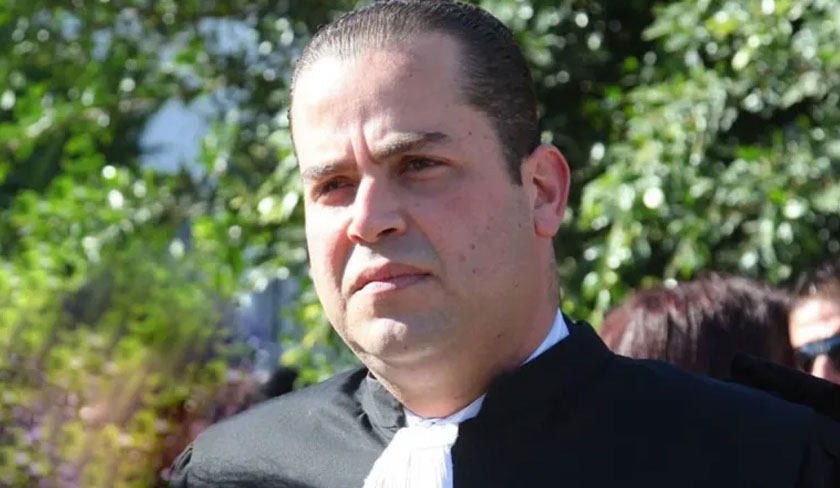
An investigating judge at Tunisia's economic and financial judicial pole ordered human rights lawyer Ghazi Mrabet held in pretrial detention on 16 September, in a case involving allegations of drug trafficking and money laundering that also names several other suspects, Business News and Kapitalis reported. Mrabet's defense committee rejects any link between him and drug trafficking, saying he was at a client's home in a strictly professional capacity. Avocats Sans Frontières said on 17 September it was dismayed by the order and that Mrabet could not meet his own lawyers during eight days in custody.

Heavy rain flooded streets across several Greater Tunis neighborhoods on 17 September, and the national meteorological institute extended its orange alert that evening to cover Tunis, Manouba, Ben Arous and Ariana, Webdo reported. Earlier the same day, Tunis governor Imed Boukhris ordered all public and private schools and universities in the governorate closed from 3pm because of the expected heavy rain and continuing storms, citing the safety of pupils and staff, Realites reported. No decision had yet been taken on whether classes would resume the next day.
Source:
Webdo · Thursday, 17 September 2026
Europe
European Commission President Ursula von der Leyen used her State of the Union address in Strasbourg to propose an emergency security protocol that any member state could trigger to convene all 27 governments in response to hybrid incidents such as sabotage, arson or drone incursions that fall short of armed attack. She called it Europe's own Article 4, after NATO's consultation clause, and separately backed a new European Security Council bringing in, among others, Britain, Norway, Ukraine and Canada. The proposals target threats that the EU's existing mutual-defense clause, Article 42(7), does not cover.
The European Commission unveiled the outline of its Kids Act on 16 September, with the full legislative text due the following day: under-13s would be barred from social media entirely, 13 to 15-year-olds would be limited to parent-supervised 'mini accounts' capped at one hour a day, and platforms would face safety-by-design rules for 15 to 18-year-olds. Commission President Ursula von der Leyen said the burden of proof would now fall on platforms to show they are safe, rather than on regulators to show they are not. The proposal still needs approval from EU member states and could take years to become law.