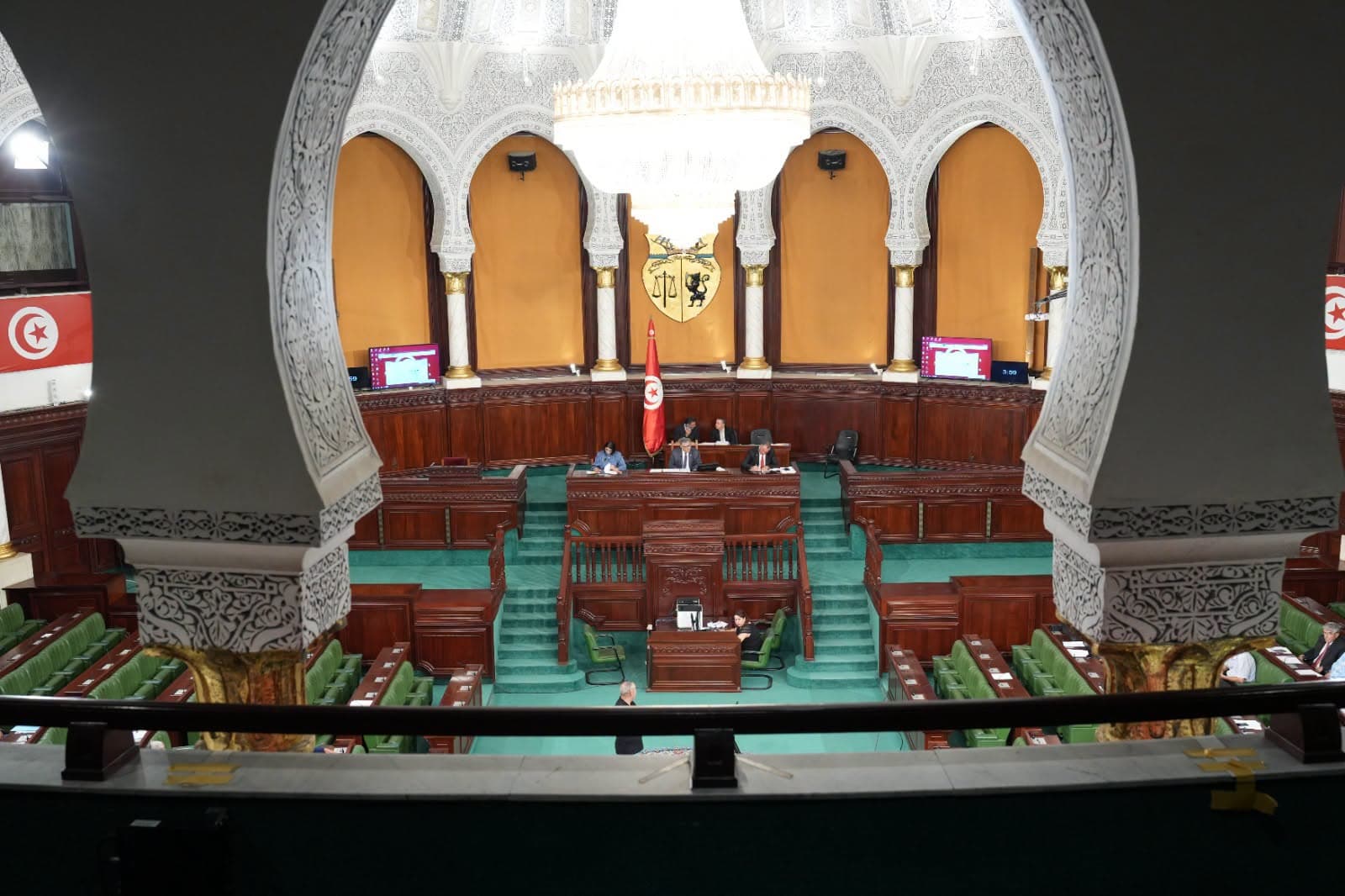
The Assembly of the Representatives of the People (ARP) held a plenary debate on Monday, July 27 on the recurring electricity and water outages hitting several regions during a record heatwave. No member of the government attended despite advance notice, and deputies attacked the executive's failure to explain the causes: Fatma Mssedi demanded the government put forward solutions, while speaker Brahim Bouderbala said the session was meant to draw on other countries' experience to inspire reform of the sector. That a crisis shutting down households and industry drew no government answer in the chamber illustrates how thin institutional accountability has become since 2021.

From Tuesday, July 28 at the Bardo Palace, the Assembly of the Representatives of the People takes up the guarantee agreement signed on 3 November 2025 with the European Bank for Reconstruction and Development (EBRD) for a loan to the Gafsa Phosphate Company (CPG): new mining equipment and a modern high-pressure filtration unit for wastewater: plus two guarantee agreements concluded on 1 and 2 December 2025 with the International Islamic Trade Finance Corporation (ITFC) covering murabaha operations that finance fertiliser imports for the Tunisian Chemical Group (GCT). La Presse, relaying the Assembly's communiqué, adds a fourth text: a second amendment to the loan contract between the central bank, acting for the state, and Afreximbank, to finance part of the state budget: an item absent from the parliamentary bureau's own statement of 23 July and so far reported by that outlet alone. The chamber then closes its fourth ordinary session under article 71 of the constitution, on an agenda that shows how far both the phosphate recovery and the budget rest on guaranteed external borrowing in a country with no IMF programme.

In a stock-take of the five years since 25 July 2021, Ridha Chkoundali, an economics professor at the University of Tunisia, says the investment rate fell to about 8 percent of GDP in 2023 from an average of 20 percent in 2015-2019, and that the tax burden has risen by five percentage points since 2015. Food inflation, the piece reports, runs at nearly three times the general rate, and unemployment has climbed, especially among university graduates. Kaïs Saïed rejected an IMF deal as dictated from outside but, the article argues, has nonetheless applied much of the same austerity: without the disbursements a programme would have brought.