
President Kaïs Saïed's last recorded official activity was on 8 July; the presidency has published nothing since and has said nothing about his health. The Italian daily Il Foglio reported on 17 July, citing unnamed sources, that Saied had been admitted to the Tunis military hospital after a heart attack requiring emergency surgery: a claim no Tunisian institution has confirmed or denied and which we could not verify independently. The silence matters because the 2022 constitution routes a permanent presidential vacancy through a Constitutional Court that has never been established, so an unexplained absence leaves no agreed answer to who would step in.

SONEDE chief executive Abdelhamid Mnaja said the disruptions to drinking water are largely a knock-on effect of the electricity cuts: the utility runs some 1,500 electrically powered pumping stations and is STEG's single largest customer, so every round of load-shedding halts production. He described the measures as adjusting supply to demand rather than cuts as such, with night-time rationing continuing in the Sahel until the Kallâa Kebira treatment plant comes on line in December 2026. The chain running from a generation shortfall to dry taps is what turns the summer's energy problem into a governance problem: two state monopolies, both starved of investment, failing together in a heatwave.
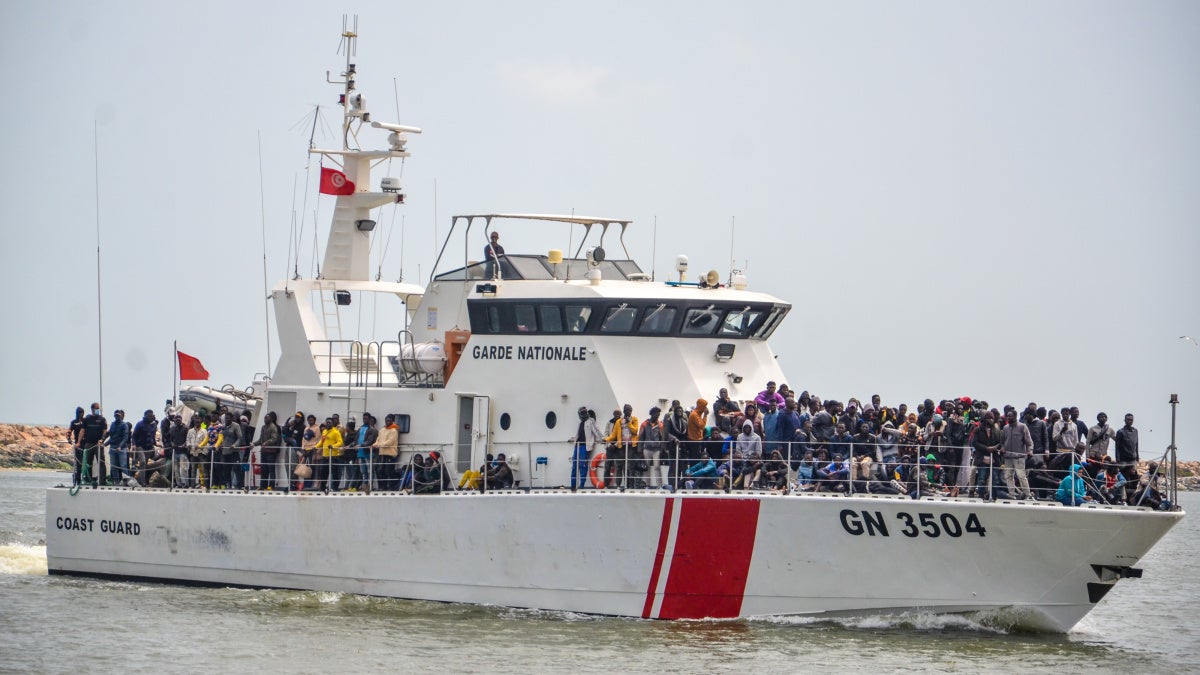
Human Rights Watch published on 16 July the testimony of a 44-year-old Cameroonian woman, whom it calls Christine, who left Sfax at around 2am on a fifteen-square-metre boat carrying 52 people and was intercepted by the Tunisian coast guard some eleven hours later; she describes the abuse and rape that followed. The account is one person's, published by the organisation with her identity withheld, and appeared the same day as the joint statement by 46 groups marking three years of the EU–Tunisia memorandum. It puts a sequence and a face to what the funding argument is about: the units carrying out these interceptions are among the recipients of EU migration money.